 In this area
Central Business District (CBD)
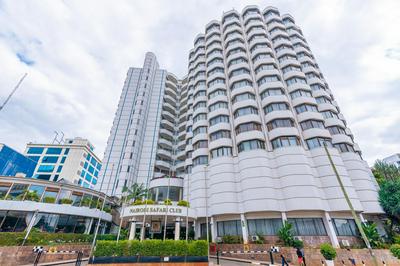
Nairobi Safari Club by Swiss-Belhotel
7.7· 625 reviews
approx. from£56 / nightSee prices
The Nairobi issue
A walk through Nairobi’s CBD, where KICC’s rooftop view, Murumbi art, matatu stages and lunch halls reveal the capital at its most unfiltered.

By Wanjiku KamauNairobi's trails, parks and green edges
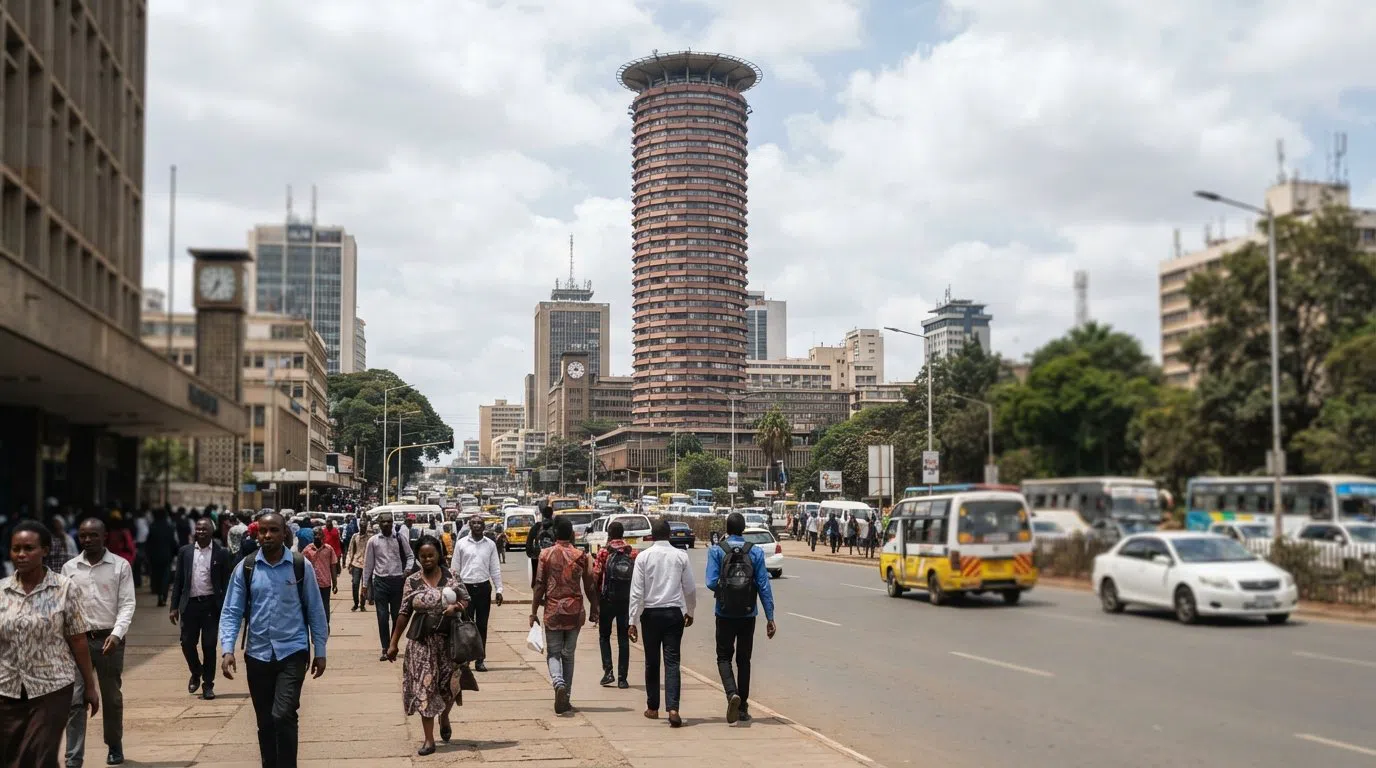
Stand on the KICC rooftop and Nairobi arranges itself with unusual honesty: matatus nose-to-tail on Tom Mboya Street, the acacia canopy of Uhuru Park to the west, and, on a clear morning, the pale shimmer of Nairobi National Park at the city’s southern edge. Down at street level, the Central Business District is all elbows and engine noise, a square kilometre where colonial clock towers, 1970s modernism and glass towers share the same jammed intersections and nobody has the manners to pretend otherwise.
The CBD is not a district that asks permission. It begins with foot traffic, mobile-money shouts and the smell of roasting maize, then slides into diesel and fried fish by the time the lunch crowd has finished pretending to work. It is busiest from about 8am to 6pm on weekdays, when the avenues between Kenyatta Avenue, Moi Avenue, Tom Mboya Street and Haile Selassie Avenue become a moving diagram of Nairobi life: banks, hawker tables, sacco offices, matatu stages, canteens, people in a hurry and people who have already given up on being in a hurry. On Sunday the whole thing loosens its tie. Offices empty, churches fill, and whole streets seem to lower their voices.
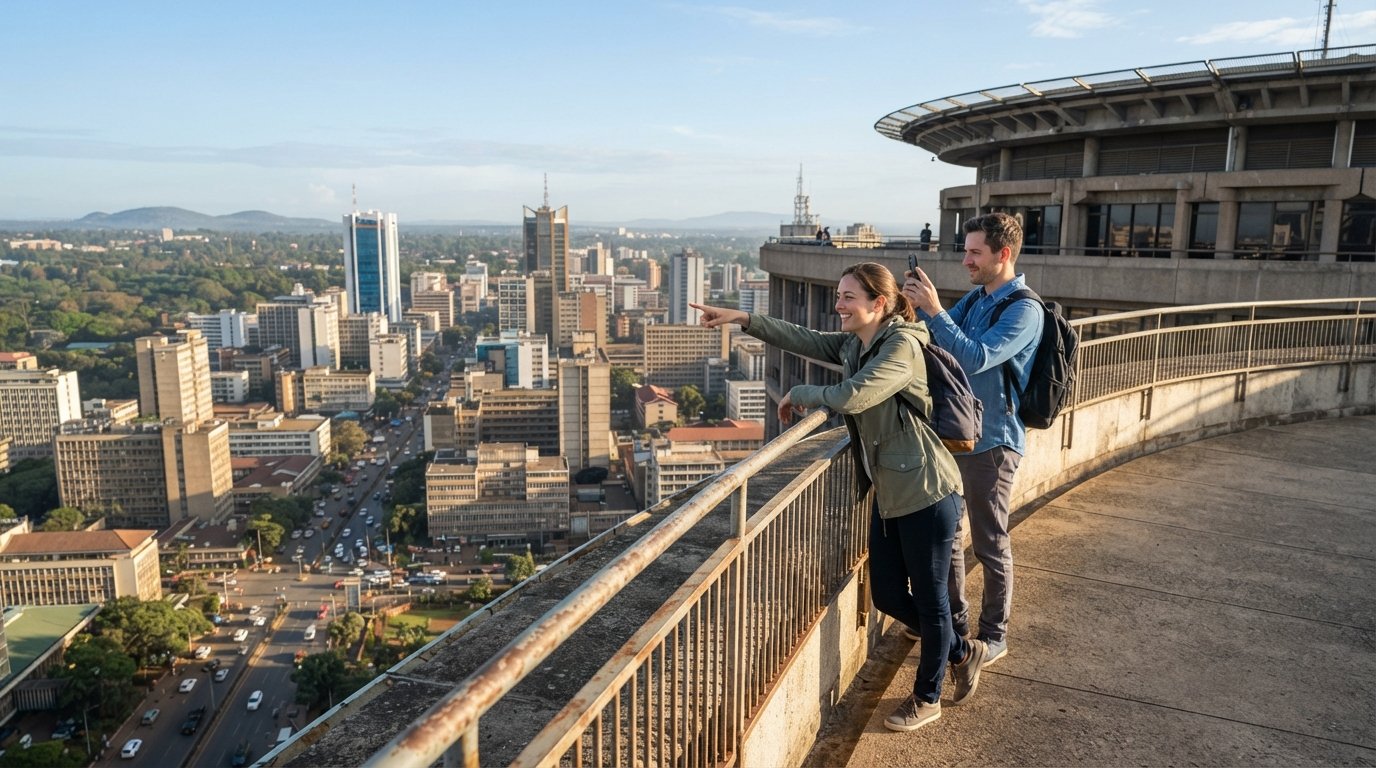
That is the CBD’s trick: it is not curated for you. It is Nairobi as Nairobi actually works, which is why it feels both abrasive and oddly generous. You can stand in one morning and take in the city’s political theatre, its architectural leftovers, its religious monuments and its public green spaces without ever leaving the grid. The district’s signature image is still the KICC, the cylindrical tower with its flying-saucer amphitheatre, anchoring City Square since 1973. Go up the lift, climb the last flights and step onto the helipad-turned-viewing deck for a proper 360-degree view — the one everyone talks about because, irritatingly, it earns the praise.
The city’s older bones show themselves quickly once you come back down. Kipande House, at Kenyatta Avenue and Loita Street, is a 1913 clock-tower building beside the old railway line; its name comes from the colonial-era identity pass Africans were once forced to carry there. It now houses a KCB branch, which is the sort of repurposing Nairobi does with a straight face. A few blocks east, Jeevanjee Gardens offers rare shade and benches among the office towers, a patch of calm laid out in 1904 and donated to the city by A.M. Jeevanjee. To the west, Uhuru Park rolls toward Uhuru Highway with a boating lake and postcard skyline views, proof that the CBD, for all its noise, still knows how to make room for a pause.
Live prices from our booking partners.
Free cancellation on many rooms. We may earn a commission when you book.
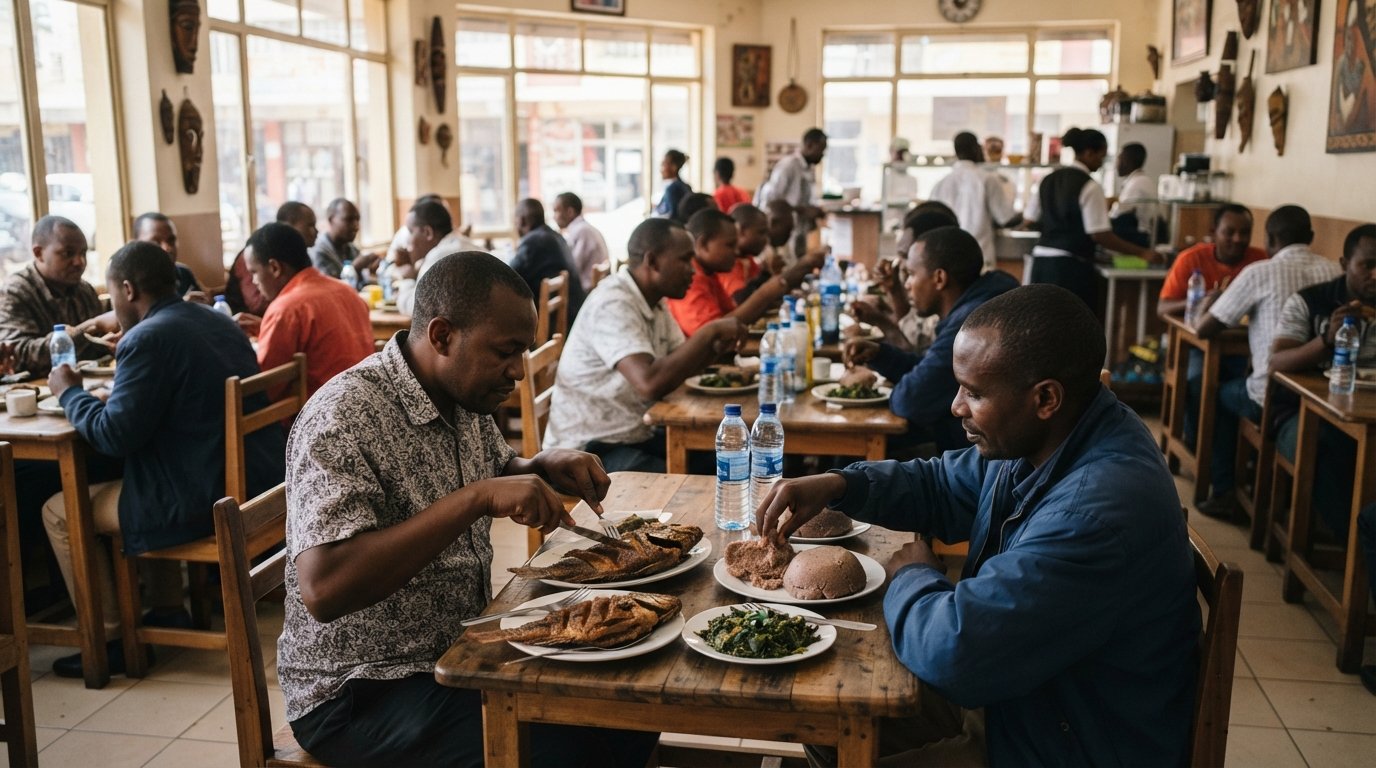
Lunch downtown is not a side note; it is the day’s organising principle. The CBD does hearty local food with the confidence of a place that knows office workers will arrive hungry and slightly impatient. K’Osewe Ranalo Foods on Kimathi Street is the institution, a big, no-frills hall that fills at midday with people who know exactly what they want and no one who is there by accident. The menu is not printed, because life is short and the fish may run out by mid-afternoon. You ask what is on, and the answer might be whole deep-fried tilapia with brown ugali, wet-fry chicken, sukuma wiki greens or nyama choma. Go early, eat well, and accept that this is a place built for appetite rather than ambience. Expect roughly KES 500–1,500 a head.
If K’Osewe is the CBD’s loud, beloved lunchroom, Café Deli is the more polished cousin standing opposite Kencom House, right where the matatus make their constant noise. It sits between café and canteen, which is often the most useful category in a city centre. People go for the chicken pie, the pastries and strong Kenyan AA coffee, with mains in the KES 800–1,500 range. You can linger there long enough to watch the city’s tempo pass the window: conductors waving, pedestrians threading through the stages, the whole district running on caffeine and deadlines.
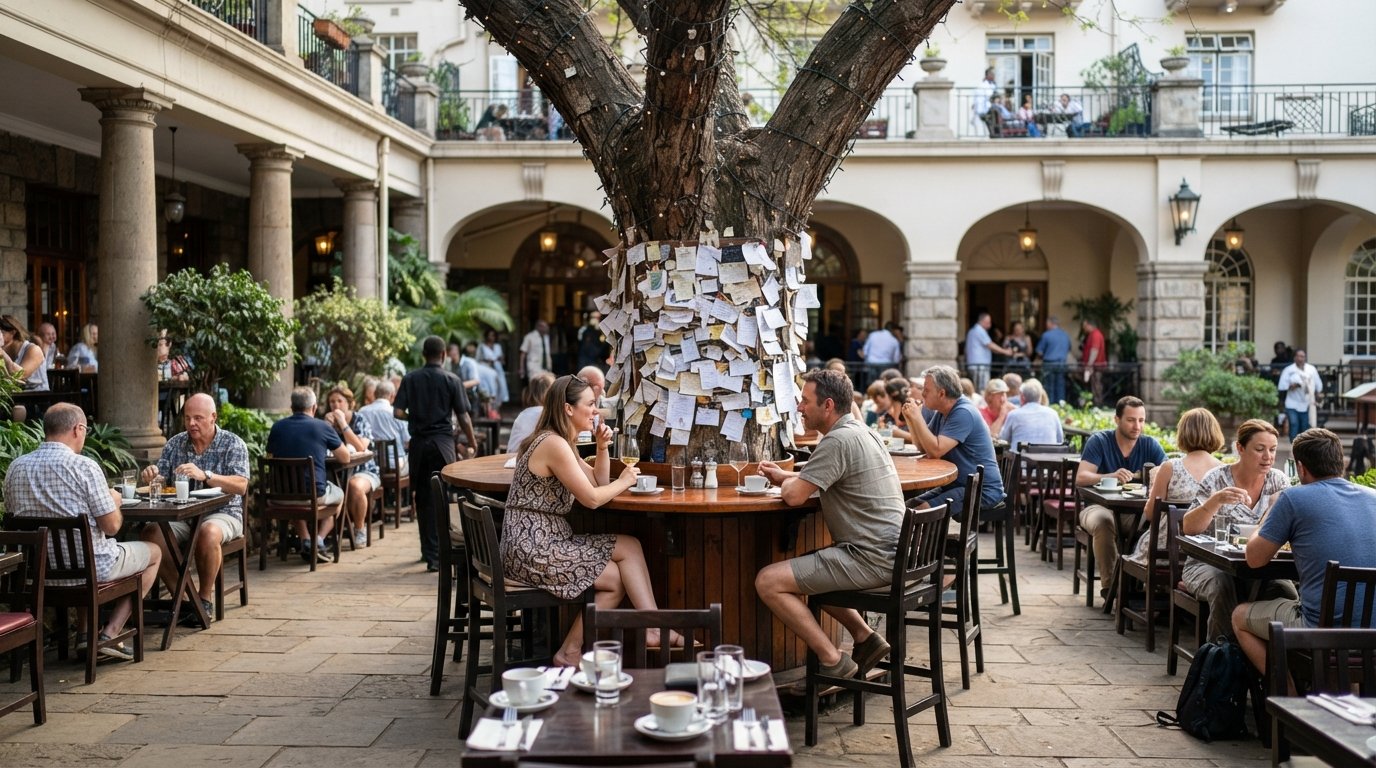
For a different kind of history, the Thorn Tree Café at the Sarova Stanley is the sort of place that reminds you Nairobi has always been a city of travellers, correspondents and people leaving notes for one another. It reopened in July 2025 after a long closure, and it is built around a Naivasha thorn tree that once served as a message board, the original pin-up wall behind Lonely Planet’s old forum name. Order coffee, or wood-fired pizza, and sit where the pavement conversation has been going on for decades.
For dependable caffeine and something to eat without theatre, Java House and Art·caffé both have CBD branches. Java, the home-grown chain that has been around since 1999, is the sort of place you can trust when the day is already complicated. Art·caffé is the more polished bakery-café option for coffee, pastries and brunch. Neither is trying to win a contest; both are useful, which downtown is wise enough to respect.
The CBD’s pleasures are best taken as a walk, not a checklist, because the district rewards the person who notices what sits between the landmarks. Start on Moi Avenue at the Kenya National Archives, opposite the shuttered former Hilton tower. Inside, the ground-floor Murumbi Gallery holds a dense Pan-African collection assembled by Kenya’s second vice-president Joseph Murumbi: masks, textiles, carvings, jewellery, rare Mau Mau-era photographs and a portrait gallery that gives the room its own gravity. This is not a museum that whispers. It feels like a storehouse of memory, which is exactly what it is.
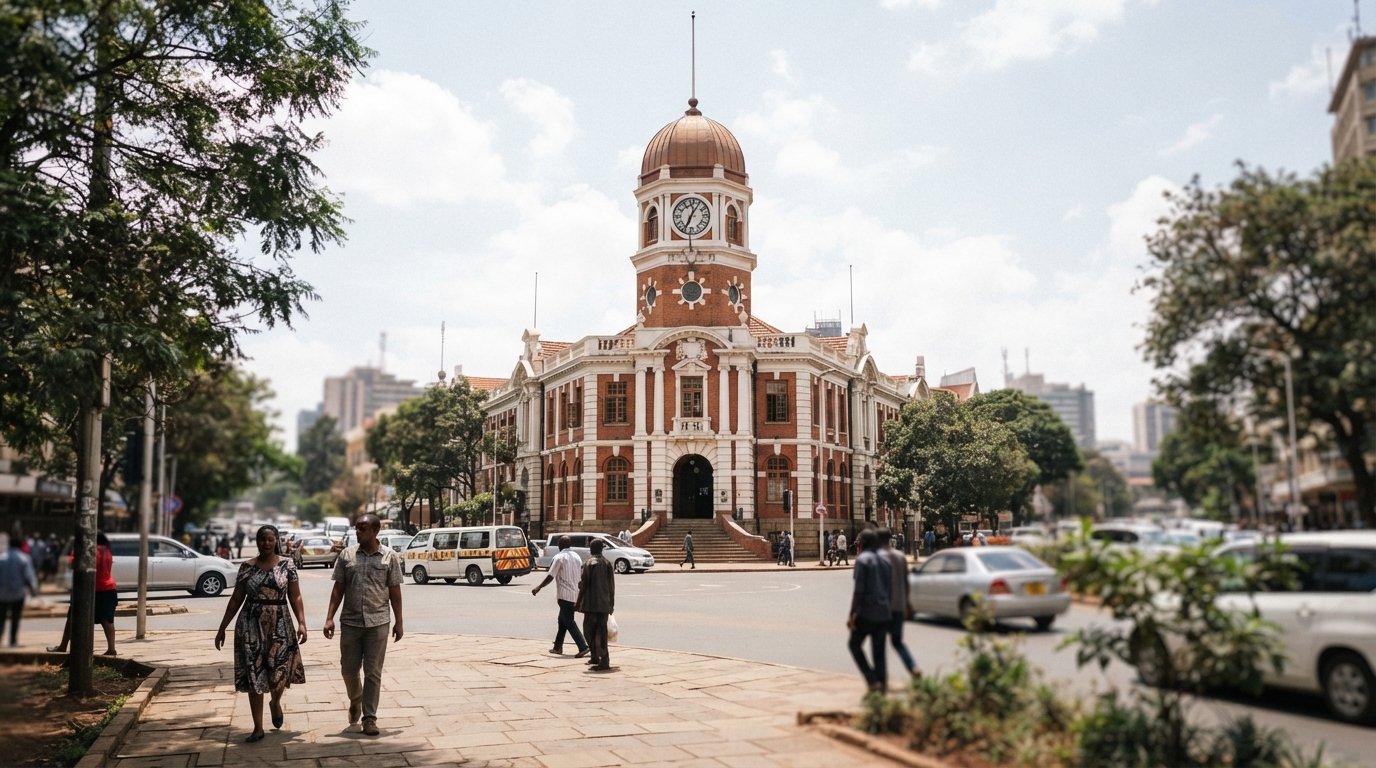
A short walk south brings you to the Nairobi Gallery, a 1913 Victorian building at the Kenyatta Avenue–Uhuru Highway roundabout, sitting on the surveyor’s Point Zero from which all distances in Kenya were once measured. Under its octagonal dome, it displays the finest of the Joseph and Sheila Murumbi collection. The old building and the collection inside seem to be in quiet conversation about nationhood, one made of stone and the other of objects.
Faith, too, has a strong address downtown. The Cathedral Basilica of the Holy Family, opened in 1963 near City Square, is the Nairobi Archdiocese’s modernist seat, while Jamia Mosque on Banda Street, with its twin minarets and three silver domes, is the country’s foremost mosque. They bookend the district in a way that feels entirely Nairobi: different histories, different rhythms, same compressed map. Nearby, the McMillan Memorial Library on Banda Street stands under restoration by Book Bunk, a 1931 heritage building guarded by stone lions, dignified enough to make the traffic around it look momentarily embarrassed.
For a more sombre stop, August 7th Memorial Park marks the site of the 1998 US embassy bombing with a garden and small visitor centre. It is the kind of place that changes the air around it. The city beyond keeps moving, but not quite as casually.
The Kenyatta International Convention Centre (KICC) rooftop for panoramic views.
The McMillan Memorial Library.
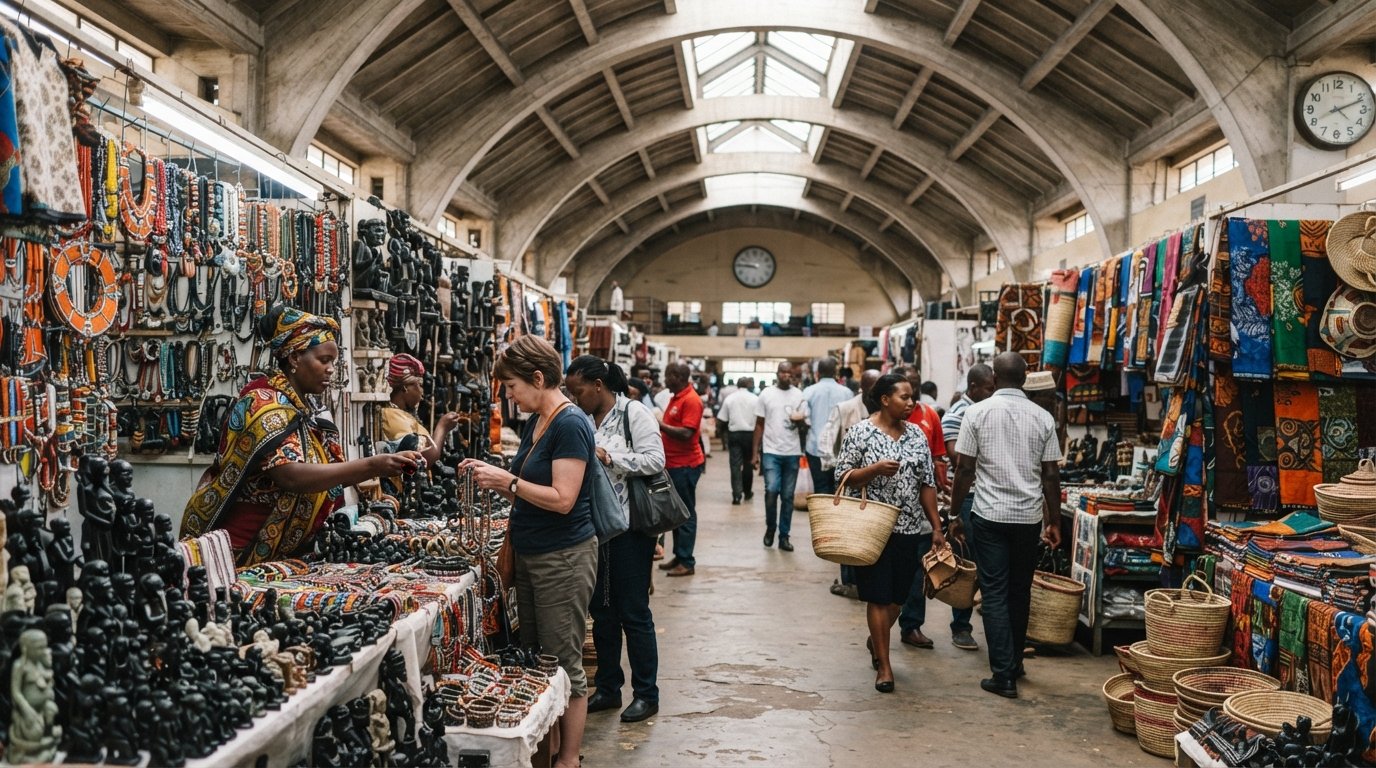
If you want to understand how the CBD actually exchanges money and material, go to City Market. It is one of those places that still feels like a working organism rather than a heritage performance: an indoor trading hall from the early 1930s sandwiched between Muindi Mbingu Street and Koinange Street, with a soaring vaulted roof that makes the central aisles feel almost cathedral-like until you notice the soapstone, the beadwork and the bargaining. The centre aisles are wall-to-wall curios — Maasai-style beadwork, Kisii soapstone, wood carvings, baskets and textiles — while the flanks still function as a working butchery and fish market for local shoppers. Haggling is expected, and if you are not haggling you are probably overpaying out of politeness.
For a more roving version of the same energy, the Maasai Market is the CBD’s craft bazaar on the move. Tuesdays at the KICC grounds are the most central and reliable for visitors, while the Saturday High Court car-park edition is also close by. This is where you look for beaded sandals, kikoi cloth, soapstone bowls and paintings, and where the first price is usually a suggestion rather than a plan. Beyond the crafts, the CBD’s avenues are lined with bookshops, tailors, camera and phone shops and mobile-money kiosks. Biashara Street remains the traditional strip for fabric, kitenge and haberdashery, the sort of street where the city’s domestic life keeps getting stitched back together one purchase at a time.
The CBD is Nairobi’s most central and best-value place to sleep, which is a practical way of saying it is for people who want the city on the doorstep and do not require the doorstep to be quiet. The grandest address is the Sarova Stanley at Kenyatta Avenue and Kimathi Street, a five-star heritage hotel dating to 1902 that reopened in July 2025. It is the kind of landmark hotel that makes the block around it feel slightly better dressed. Downstairs, the Thorn Tree Café gives it a sense of place rather than just polish.
The rest of the district offers a spread of reliable mid-range and business hotels along Kenyatta Avenue, Kaunda Street and Kimathi Street, plus budget guesthouses toward Tom Mboya Street and River Road. If you can choose, streets nearer City Square and Kenyatta Avenue are calmer and better lit. The eastern edge around River Road and the bus stages is cheaper but grittier, and worth avoiding after dark. The upside of staying downtown is obvious: you can walk to the KICC, the museums and the markets. The downside is equally obvious: street noise, late-day fatigue and a district that goes quiet and less welcoming at night.
Our best-rated stays in this neighbourhood. Prices are approximate “from” rates — confirmed at the provider when you continue. We may earn a commission if you book through our partners — at no extra cost to you.
In this area In this area
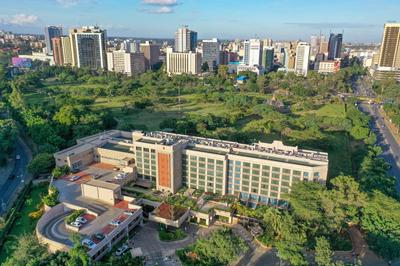 In this area
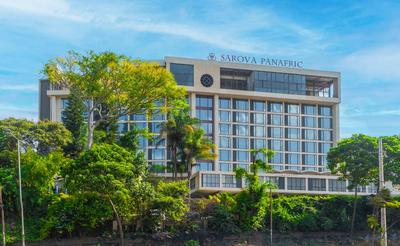 In this area
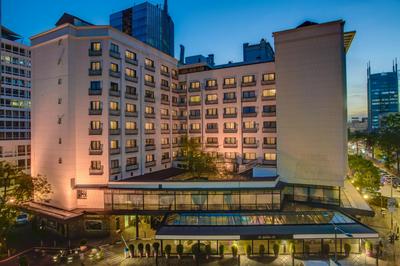 In this area
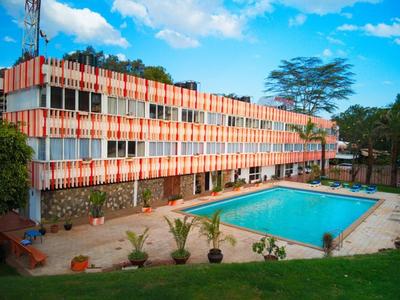 In this area
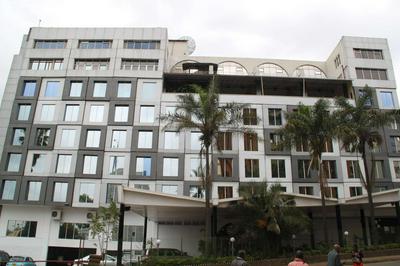 In this area
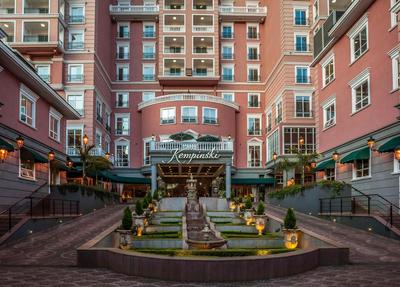 In this area
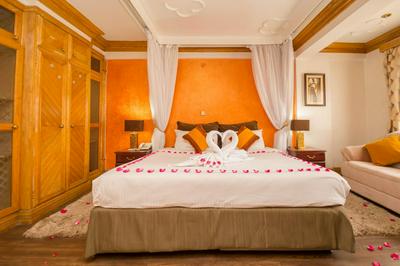 In this area
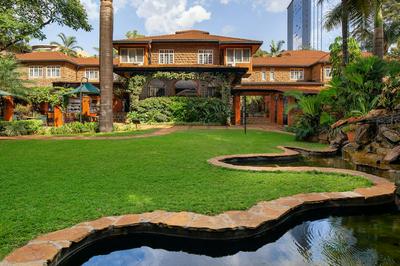 In this area
 In this area
 In this area
The CBD is compact enough to be read on foot, at least by day. The core landmarks sit within about a 15-minute walk of one another around Kenyatta Avenue, Moi Avenue and City Square, and that is the right scale for understanding it. Walk the main avenues, not the alleys. Keep your phone in your pocket. Watch the crosswalks as if they have a personal grudge.
The district is also the transport heart of the city, which is both a blessing and a warning. Matatus marked ‘Town’ or ‘CBD’ converge on stages like Kencom and Ambassadeur for around KES 50–100 a ride. They are crowded and a magnet for pickpockets, so keep bags in front and phones away. For anything beyond walking distance, ride-hail apps such as Uber, Bolt and Little are cheap, metered and far less stressful. The old-line commuter train and the SGR link-bus connect the CBD to the Nairobi Terminus for the Madaraka Express to Mombasa. Jomo Kenyatta International Airport sits about 18–20 km southeast, roughly 30–45 minutes by cab in light traffic, though rush hour will happily stretch that to an hour or more. And once night falls, do not walk: take a taxi or ride-hail door to door.
The CBD’s appeal is that it does not flatter the visitor. It gives you the city with the volume turned up and the edges left sharp. That can be tiring, but it is also the point. If you want a quiet, leafy base, there are better neighbourhoods. If you want the Nairobi that Kenyans actually use — the one with the skyline, the lunch halls, the markets, the monuments and the honest chaos of a working centre — this is where you start.
Gallery
Yes, if you want the most central and best-value base in the city. It’s ideal for landmarks, museums and markets, and it suits business travellers and budget visitors more than holidaymakers. For a quieter or more nightlife-heavy stay, Karen, Kilimani or Westlands make more sense. The reopened Sarova Stanley is the standout hotel address downtown.
By day, it’s fine with normal city sense: stick to the main avenues, keep your phone and wallet out of sight, and watch for pickpockets in crowds and on matatus. After dark, the offices empty and the streets feel quieter and riskier, so don’t walk at night; use a taxi or ride-hail door to door instead.
Go up the KICC for the 360-degree view over the city and, on a clear day, Nairobi National Park. If you have time, pair it with the Nairobi Gallery or Kenya National Archives for the Murumbi collection, then finish at City Market for crafts and a proper look at downtown life.
For a classic lunch, K’Osewe Ranalo Foods is the place for fried tilapia, brown ugali, nyama choma and greens. If you want coffee and something lighter, Café Deli, Thorn Tree Café, Java House and Art·caffé all have reliable CBD options.