Nairobi-numret
Sheldrick's elephant nursery hour in Nairobi National Park
One hour at a rope cordon inside Nairobi National Park, booked direct by email, with a morning and an afternoon built around it.

Av Lukas BrandtNairobi neighbourhood by neighbourhood, on foot and by matatu
The Sheldrick Wildlife Trust nursery opens for one hour a day, 11 a.m. to noon, every day except 25 December. Arrive by 10:30 a.m., because the hour cannot be held open for late arrivals. Entry is KSh 2,600 for an adult and KSh 650 for a child, in cash, and a Nairobi National Park gate fee sits on top of that.
What you see in the nursery hour
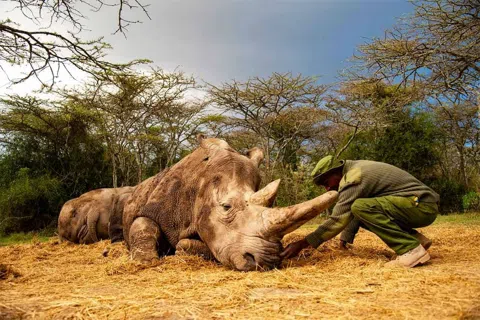
Sheldrick Wildlife Trust Nairobi Nursery (inside Nairobi National Park, off Magadi Road) runs the feed in a red-earth clearing with a rope cordon around a muddy wallow. Keepers in khaki uniform stand out in the open holding oversized milk bottles. The orphans come in at knee height under woollen blankets, jostle for a bottle, and spray red dust across the ground and across everyone along the rope.
You stand for the hour at the cordon while the keepers work inside it with the elephants. The entry money is a donation to the Trust, which raises orphaned elephants for release in the field. One hour is all that is sold. The nursery opens at no other time of day, and it admits nobody who has not booked.
Planera din resa till Nairobi
Aktuella priser från våra bokningspartner.
Gratis avbokning på många rum. Vi kan få provision när du bokar.
Booking the nursery hour
Every visitor has to be on a single booking made direct with the Trust's Nairobi office by email. Agent and third-party bookings are not valid. Same-day entry is impossible, so send that email before you fix anything else in the morning.
Groups are welcome, and every member of the party goes on the same booking. You pay the donation in cash at the nursery gate, which is the one payment of the day that works that way. Half-day guided runs pairing the nursery with the Giraffe Centre operate seven days a week, and you still make the email booking yourself.
Getting through the park gate
The nursery sits inside Nairobi National Park (Magadi Road, KWS Mbagathi Workshop Gate), and the park fee is layered on top of the nursery donation. Non-residents pay KSh 10,300 an adult and KSh 5,150 a child per day. Kenyan residents pay KSh 2,000, and KSh 500 for a child, with proof. Buy that ticket on eCitizen before you arrive.
Gates run 6 a.m. to 6 p.m. Vans and 4x4s go in freely, and minibuses and tour vehicles are routine at every gate. Inside, the grassland is open and yellow under flat-topped acacias, with zebra grazing and the glass towers of the city standing on the horizon directly behind the animals.
Best time to go
The hour does not move, so the decision is what you build around it. Drive in at opening and give that grassland the early light before you turn toward the nursery gate.
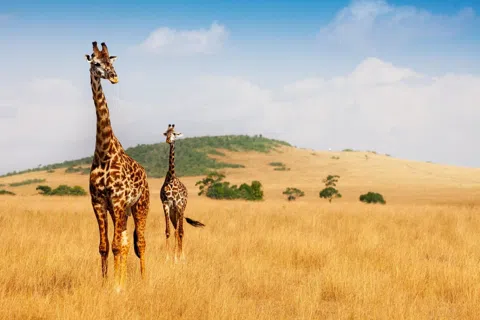
Giraffe Centre (Langata) is the standard pairing and a short hop away. It opens 9 a.m. to 5 p.m. every day including holidays, and tour buses land from 10:30 a.m. Reach it at 9 a.m. and the circular wooden platform is yours: Rothschild's giraffe at head height, long purple tongues reaching for pellets held in your palm, warthogs rooting on the grass below. Entry is KSh 1,500 for a non-resident adult and KSh 750 for a child. Residents pay KSh 400 and KSh 200. Payment is by card or M-Pesa.
That sequence gives you the platform before the coaches and leaves time to cross to Magadi Road for the 10:30 a.m. arrival. Any day of the week works, except 25 December.
Is it worth the early start
The hour asks for a direct email booking, two separate fees and a fixed arrival time, and it gives you 60 minutes at a rope cordon. It suits a traveller who wants the keepers' routine at close range and can plan a morning around a time that will not shift.
Near the park's main gate
Ivory Burning Site Monument (Nairobi National Park, near the Langata Road main gate) carries the same theme as the nursery. Kenya burned 12 tonnes of ivory here in 1989 and 105 tonnes in 2016. A blackened circular stone monument and commemorative plaques stand on mown lawn, ringed by benches and tall acacia. Entry is included in the park fee and no booking applies.
Nairobi Safari Walk (park main gate) is the fallback when the nursery hour is fully booked. An elevated timber boardwalk on stilts runs through indigenous forest and wetland enclosures, past thatched viewing shelters and signboards, with albino zebra and bongo below. It opens 8 a.m. to 5 p.m. daily and needs no booking, and the wide boardwalks take crowds. Entry is KSh 3,200 for a non-resident adult and KSh 1,900 for a child; East African visitors pay KSh 300 and KSh 200. The gate also sells combined Nairobi Sanctuary and Nairobi Safari tickets. You cover the whole route on foot.
Nairobi Animal Orphanage (park main gate) is KWS's own rescue centre, open daily 8 a.m. to 5 p.m. to walk-ins, with entry at the same rates as the Safari Walk. Older stone-and-mesh enclosures sit under shade trees behind green and white KWS signage, cheetah and leopard pacing behind wire. The enclosures are dated, and KWS has signalled plans to relocate the place.
Karen's museum, forest and workshops
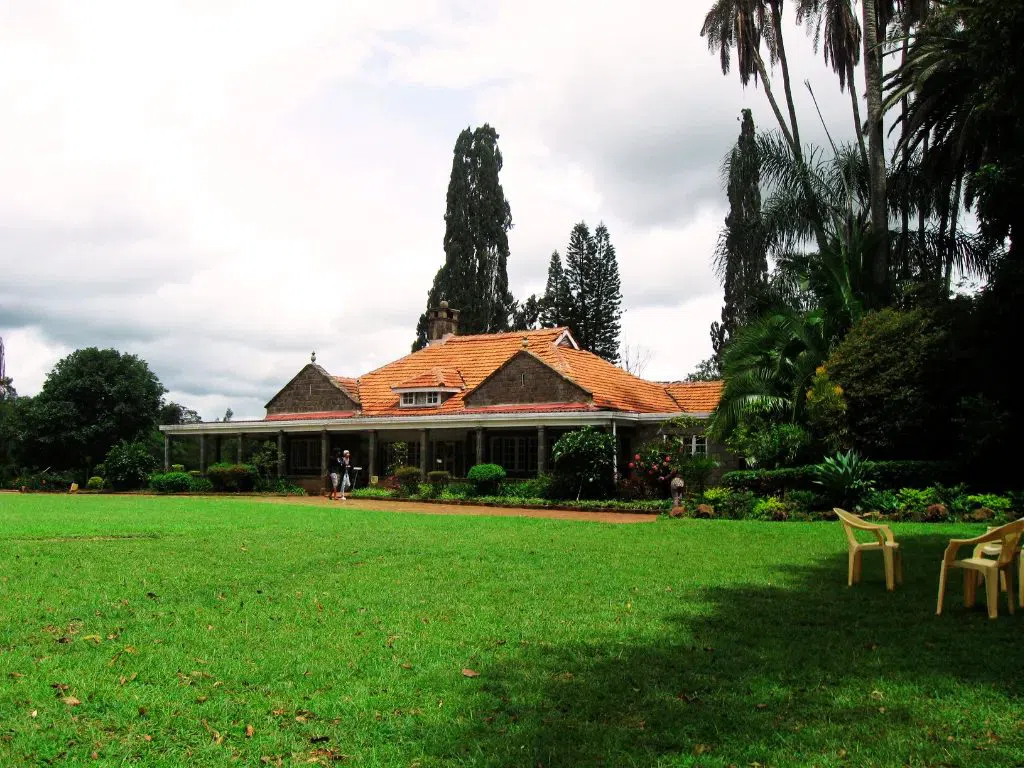
Karen Blixen Museum (Karen) opens daily 8:30 a.m. to 5:30 p.m. and is the obvious follow-on to a late-morning nursery slot. The house is a low whitewashed colonial farmhouse under a red tiled roof with a deep verandah, manicured lawns and the Ngong Hills ridge behind, and the rooms hold period furniture and a hand-cranked coffee grinder. Guided tours are included and run continuously as groups gather. A non-resident adult ticket is KSh 2,341; East African visitors pay KSh 550 an adult and KSh 300 a child. Tickets are sold on eCitizen only, the gate turns cash away, and the fees rose in May 2026.
Kazuri Beads Factory (Karen, a few minutes from the museum) runs a free guided tour of the workshop, following raw clay through painting and firing. Women roll and hand-paint beads at long open benches, trays of glazed beads dry in rows of colour beside the kiln, and finished strands hang on wooden racks. Allow an hour to 90 minutes with shopping. Jewellery starts at KSh 1,000. The workshop has employed and trained Kenyan women since 1975.
Utamaduni Craft Centre (Karen) opens 9 a.m. to 6 p.m. daily with free entry and no booking. The rambling two-storey house gives each room to a different stall, with kikoi fabric, soapstone and beadwork, and the rooms open onto a shaded garden terrace café. Prices are fixed, which makes it a calmer option than the city-centre markets.
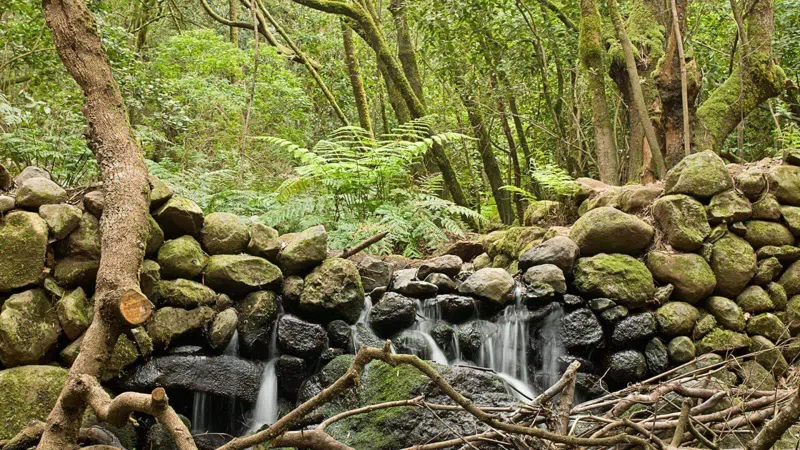
Oloolua Nature Trail (Karen) opens 9 a.m. to 6 p.m. daily and is the one piece of wild walking on foot near the orphanage. A shaded dirt path runs through dense indigenous forest beside a brown river to a small waterfall over dark rock, a bamboo thicket and a low-roofed cave. Entry is KSh 200 to KSh 400 per person, paid by M-Pesa or eCitizen.
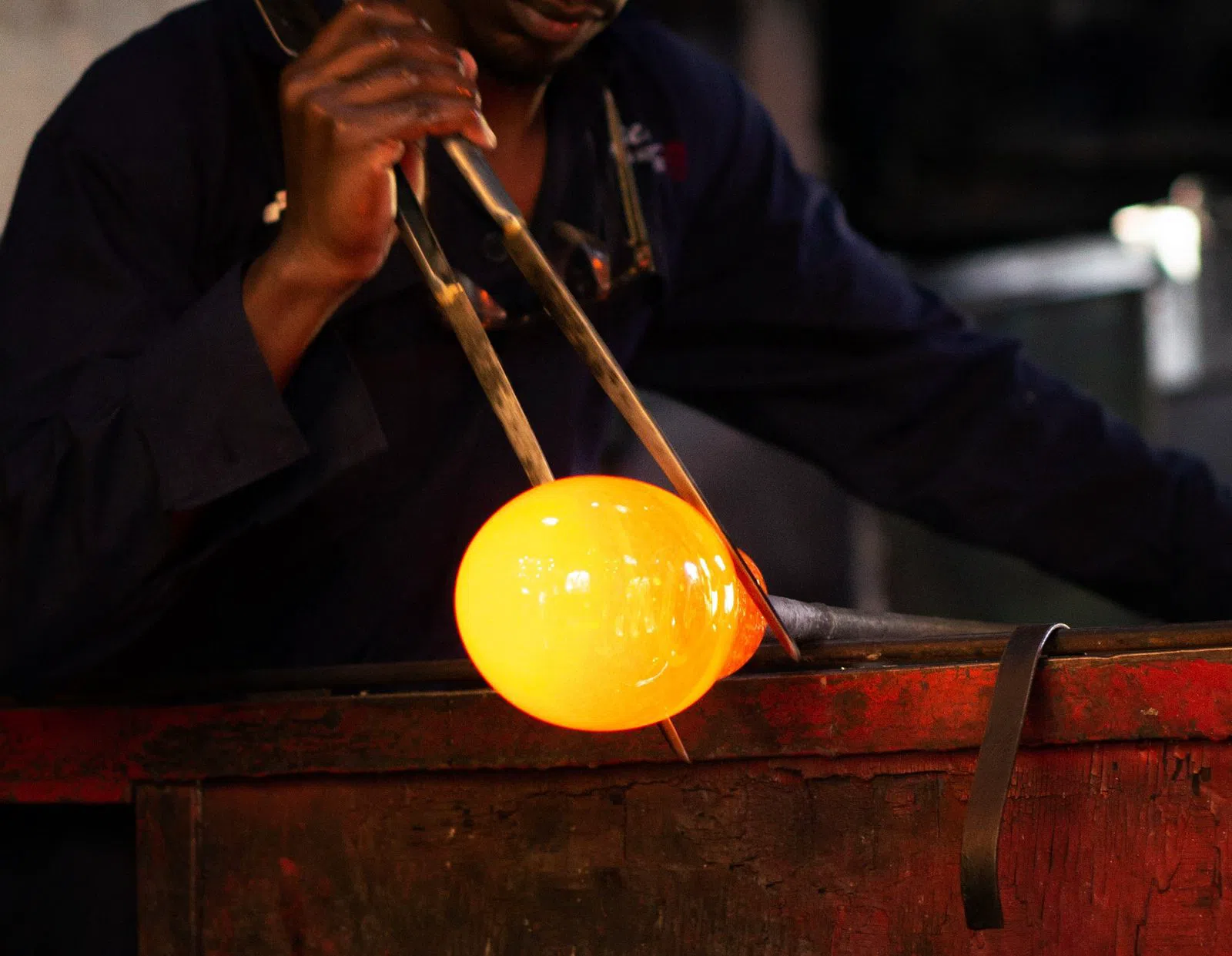
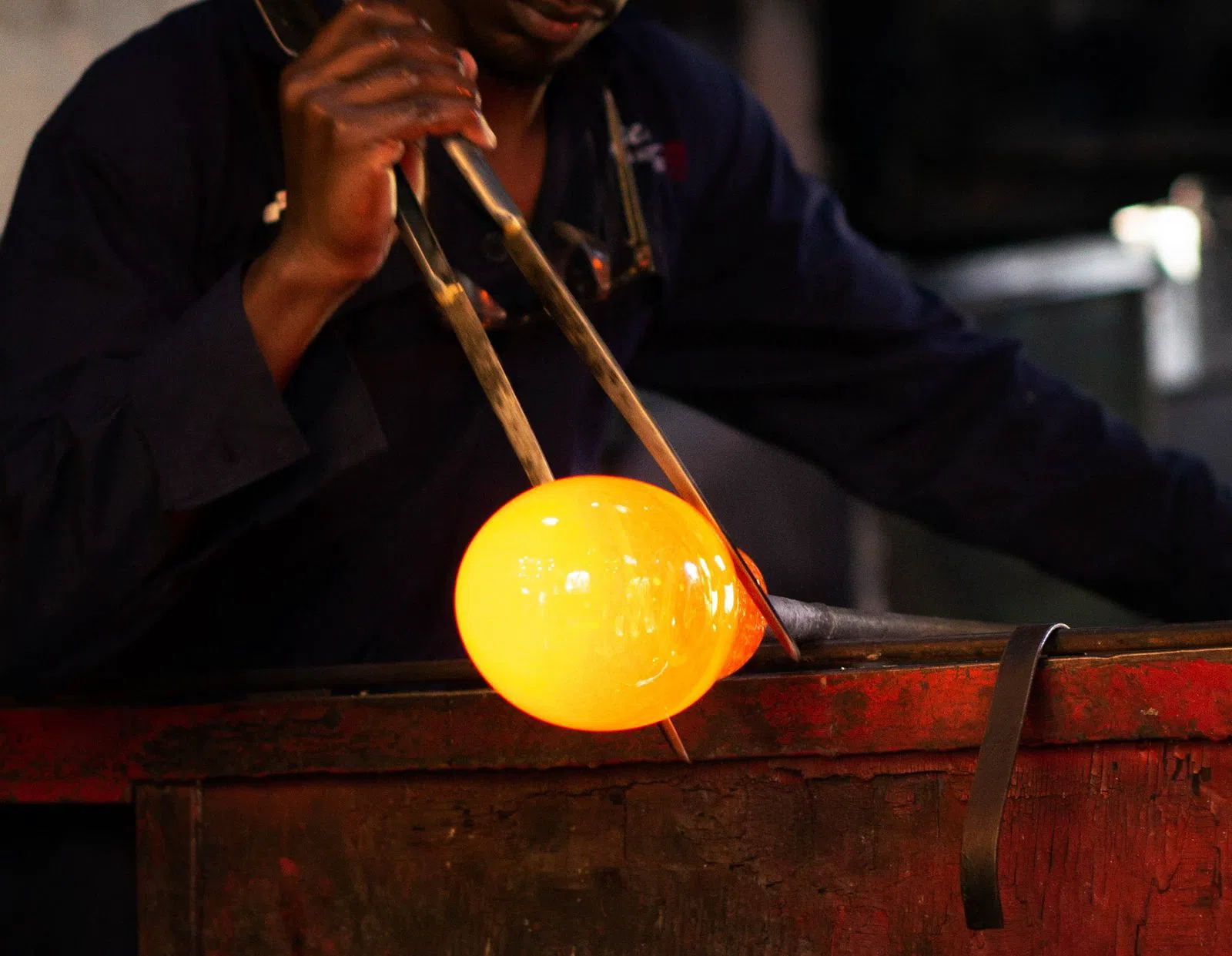
Kitengela Hot Glass (down Magadi Road past the orphanage's gate road, toward Ongata Rongai) fits the same half day. Domed and turreted buildings are covered in bottle ends and broken tile, with bridges and sculptures set in scrub at the park's edge. Glassblowers turn glowing molten recycled glass at a furnace from 8 a.m. to 4:30 p.m. Tuesday to Saturday, with shorter hours on Sunday and Monday. The café serves tea and homemade ice cream.
Eating in Langata and Karen
Tamambo Karen Blixen Coffee Garden (two-minute walk from the museum) is the natural lunch once the nursery hour is done. Tables sit on the lawn of Karen Blixen's old 1908 coffee-farm manager's house, under mature fig and jacaranda, with stone cottage walls and white linen in dappled shade. The Tamarind group now runs it as Tamambo, and the old Karen Blixen Coffee Garden name still appears on the signs. Mains run KSh 1,800 to KSh 3,000. Book ahead for Sunday lunch.
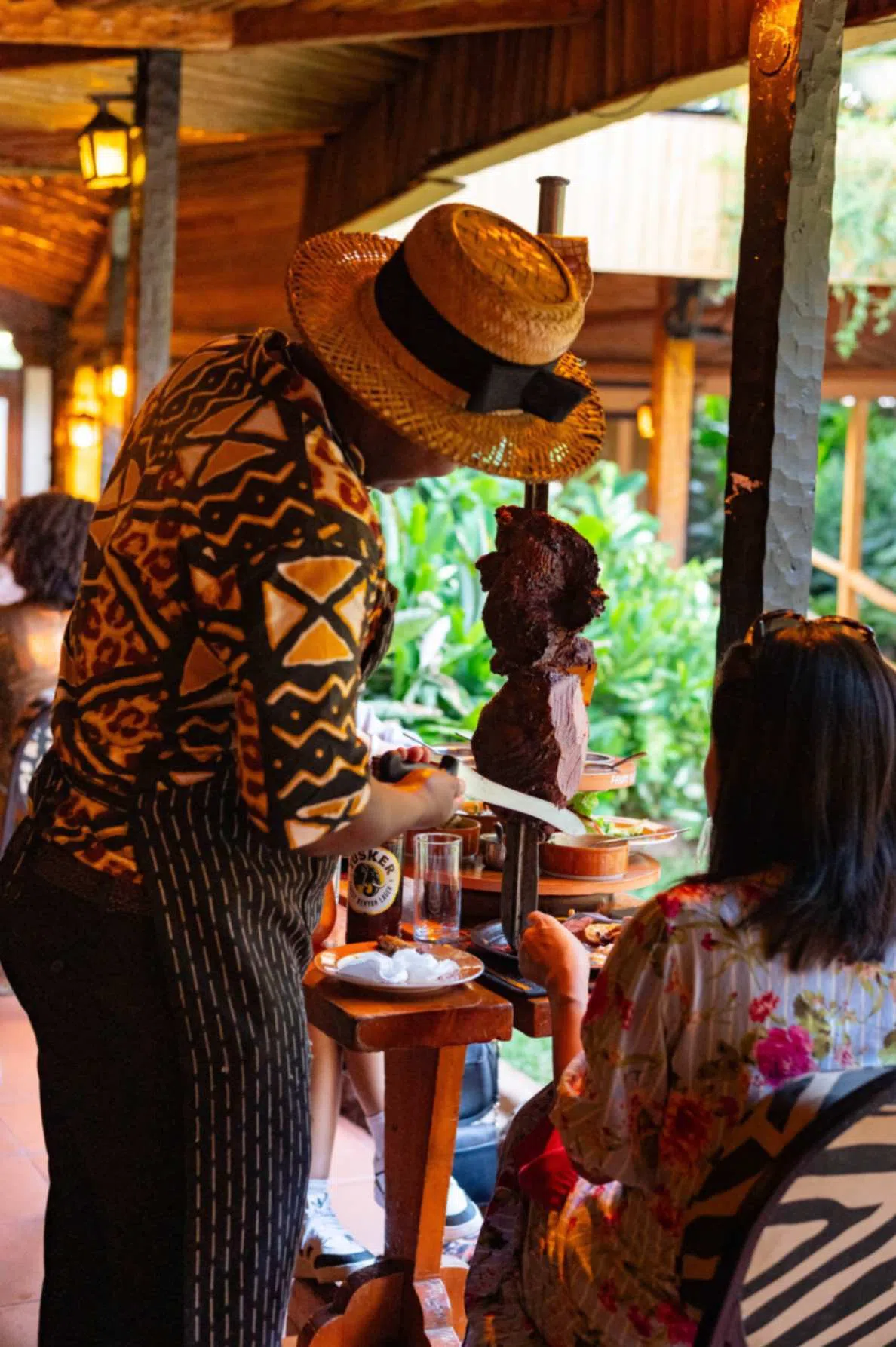
The Carnivore Restaurant (Langata) sits on the park side of town and opens daily from noon. A huge central charcoal pit bristles with Maasai-sword skewers of roasting meat, carried out to cast-iron plates in thatched open-sided pavilions, and the meal ends when the small paper flag on your table goes down. The fixed all-you-can-eat price is KSh 4,950. Pre-book lunch or dinner, and do it further ahead for a weekend.
The Talisman (Ngong Road, Karen) closes on Mondays. A converted bungalow links a series of garden rooms, with a fireplace indoors, eclectic art on the walls and candlelit tables on gravel under trees strung with lights. Mains run KSh 1,500 to KSh 2,500. Reserve a few days ahead, and earlier for weekend evenings and Sunday lunch.
Staying close to the Magadi Road gates
Nairobi Tented Camp (Karen forest) re-opened in June 2025 and is no longer inside the park, though it still runs game drives and sits close to the Magadi Road gates. Nine canvas tents stand on raised platforms among tall indigenous forest, around an open-sided mess tent with a bar and a dining table, lanterns and bucket-style bush fittings. Rates run KSh 13,500 to KSh 15,500 per person per night depending on month. Nine tents means a party beyond a family takes the whole camp.
Giraffe Manor (Langata) is the Langata splurge, a 1930s ivy-covered Scottish-style stone manor with mullioned windows, where a giraffe leans its head through an open first-floor casement over a laid breakfast table. A dozen rooms book out many months ahead, and the rate starts at KSh 180,000 per person per night, all-inclusive, with Giraffe Centre entry included. Day visitors cannot drop in. It closes 10 April to 10 May 2026.
Before you go
Book the nursery hour direct by email, carry cash for the entry donation, and buy the park and museum tickets on eCitizen before you set out. Check the closed day of anything you have pencilled in for a Monday. See the Nairobi guide and the Nairobi hotel search.
Innan du åker
How do you book a visit to the Sheldrick nursery in Nairobi?
Book by email with the Trust's Nairobi office, and put every visitor in your party on one booking. Bookings through an agent or a third party are not valid, and you cannot get in on the same day.
What does the visit cost?
The entry donation is KSh 2,600 for an adult and KSh 650 for a child, paid in cash on arrival. A separate Nairobi National Park gate fee applies: KSh 10,300 for a non-resident adult and KSh 5,150 for a child, or KSh 2,000 and KSh 500 for Kenyan residents with proof. Buy that one on eCitizen before you arrive.
What time should I get there?
Be at the nursery by 10:30 a.m. The visit runs 11 a.m. to noon and does not wait for late arrivals.
Which gate do I use, and when does it open?
You reach the nursery through the KWS Mbagathi (Workshop) Gate on Magadi Road. Park gates run 6 a.m. to 6 p.m., and vans, 4x4s and tour minibuses all go in.
What can I do instead if the nursery hour is fully booked?
The Nairobi Safari Walk at the park's main gate takes walk-ins daily 8 a.m. to 5 p.m. without a booking, at KSh 3,200 for a non-resident adult and KSh 1,900 for a child; East African visitors pay KSh 300 and KSh 200.