Leserne i sentrale Nairobi holder seg stort sett utenfor syne. De er i etasjen over, bak en heislobby i en kontortårn fra 1980-tallet, eller tre rader inn i en lesesal der hver pult er opptatt klokken to om ettermiddagen, eller på en plaststol i et restaurert bibliotek øst for jernbanen med en roman de ikke trengte å betale for. Bøkene er billige, hyllene er tette, og nesten ingenting er satt opp slik en kjede ville gjort det – og det er nettopp grunnen til å gå på jakt.
Det som følger, er hvor det gamle lageret faktisk befinner seg, hva det koster, når dørene er åpne, og hvilke steder som passer for et par som titter i stillhet, kontra en gruppe på seks som vil snakke. Noen av disse er butikker. Andre er offentlige institusjoner med et offentlig formål, der du er gjest snarere enn kunde, og den forskjellen betyr mer her enn i de fleste byer.
De to enkleste dørene i sentrum
Hvis du har én time og ingen plan, start på Prestige Bookshop (CBD). Den ligger på gateplan, ikke opp en trapp, noe som gjør den til den enkleste bokhandelen i sentrum å spasere rett inn i, og den er romsligere enn butikkene ovenpå, så små grupper skaper ingen problemer for noen. Den har ligget i sentrum lenge og har en skikkelig avdeling for afrikansk litteratur, ikke en symbolsk hylle med tre kjente navn. Prisene ligger omtrent på KSh 800 til 3 500. Åpningstidene er mandag til fredag 9–17 og lørdag 9–15; søndag er stengt, slik det meste av sentrum i praksis er.
Noen minutters gange unna ligger Halfpriced Books (Bihi Towers, CBD), der Nairobi oppbevarer de gamle bøkene sine. Dette var den opprinnelige avdelingen fra 2019, og den er fortsatt den beste i kjeden for brukt bøker. Brukt starter rundt KSh 300, og det meste av hyllen ligger mellom KSh 500 og KSh 1 200. Gangene er smale, virkelig smale, den sorten der to personer må vike for hverandre, og de ansatte tar det rolig om det kommer et par ekstra kropper. Er dere fem eller seks, har avdelingene på Village Market og Karen langt mer plass, og da blir alle gladere.

Det er innkjøpsmodellen som fyller hyllene. Du kjøper en bok, du leser den, du leverer den tilbake, du selger den tilbake, og den neste koster deg halvparten. Utvalget er bokstavelig talt det byen har lest ferdig, så sortimentet er en stadig utskifting, ikke en kuratering. Ikke kom med en bestemt tittel i tankene og forvent å finne den. Kom med en time og toleranse for å bla, og du går derfra med tre ting du ikke visste fantes. Flyplass-thrillere og management-pocketbøker dominerer den raskest omsettelige enden, som overalt, men det er avdelingene for østafrikansk og kenyansk litteratur som gir butikken sitt rykte: skoletekster, utsolgte lokale utgaver og romaner som gikk ut av trykk i ett land og holdt seg levende i dette.
Where Kenyan writing is treated as literature
Nuria Bookstore (city centre) is the shop to visit if you want to read Kenya rather than read in Kenya. It stocks over 1,800 African authors, and it treats self-published Kenyan writers as real literature rather than a consignment nuisance, which no other retailer in the city does properly. A substantial number of the writers on those shelves sell nowhere else in physical retail at all. Prices run KSh 500 to 2,500 a title.

The shop is compact. Groups of up to about six are fine; beyond that you are standing in each other's way. Nuria also hosts author meet-and-greets in the same space, worth timing a visit around if you can, since a small room makes an event there a conversation instead of a performance. The most useful thing you can do at the counter is describe the last book you loved and let staff work from that. They know the stock, including the parts of it that have no reviews and no distribution and no way of reaching you otherwise.
Soma Nami Books (Ngara, with a second branch at Greenhouse Mall on Ngong Road) is the most sociable door on this list. It is a bookshop and a book café, it runs a book club, and it hosts events, so groups are expected rather than tolerated, though anything over eight should be booked ahead so they can hold the space. Browsing is free; books run KSh 800 to 3,000 and coffee is around KSh 300, which makes it the one place here where you can reasonably sit for two hours.

Soma Nami is also the organising force behind Nairobi's African Book Fair, whose fourth edition runs in August 2026 at the national library. If your dates land anywhere near that, restructure around it. Of the two branches, the Ngara shop is the workaday original and has more character; the Greenhouse Mall branch is simply easier to reach if you are coming along Ngong Road and do not want to deal with the centre.
Twenty shillings for a desk
Maktaba Kuu, the Kenya National Library Service headquarters (on the Ngong Road side of the centre) shows you how Nairobi actually reads. Adult entry is KSh 20 a day. Children are free. Membership is free. For that twenty shillings you get a desk in what is, by some distance, the busiest reading room in the country.
Go in the morning if you want a seat. By early afternoon on a weekday the tables fill with students, job applicants working through application portals, and people who simply need four uninterrupted hours somewhere cool and quiet. Around national exam periods it is standing room. Opening hours are Monday to Friday 8am to 6.30pm and Saturday 8.30am to 5pm.
Treat it as a working institution, because that is what it is. Group and school visits are entirely normal but should be arranged with the branch first rather than sprung on the desk. Keep your voice down, do not photograph people at the tables without asking, and if you are there to look and not to read, look briefly and leave the desk for someone using it. The library hosted the 2026 African Book Fair, which gives you the scale of the building and how seriously it is run.
The restored libraries east of the centre
Two public libraries east of the city centre have been restored by the Book Bunk trust under a phrase worth quoting because it explains the design decisions: palaces for the people.
Eastlands Library (Makadara, east of the centre) is the busiest of them, close to 24,000 users in 2022, and the best-working example of the idea. Entry is free. Book Bunk runs holiday programmes here that pull in hundreds of children, which is either exactly what you want to see or exactly what you want to avoid, depending on why you came. Group visits are welcome with notice; email ahead instead of arriving as a delegation. If you want the living scene and not the heritage one, this is the trip to make.
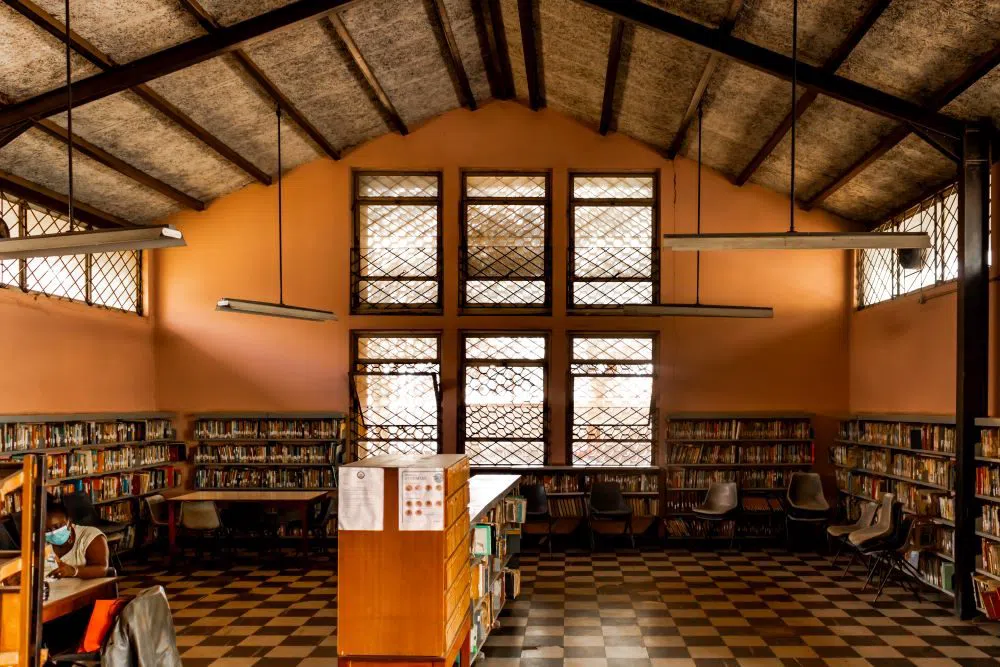
Kaloleni Library (Kaloleni estate) is the smallest of the three and the most affecting. Restored in 2020, it was rebuilt around children, and children have priority on the space; it is a small building, so a group of adults browsing changes the room. Visit with notice, keep the party small, and stay out of the way of the reading circle. Much of the argument over Kenyan independence was conducted on this estate, in the social hall next door. The library is not a monument to that, but it sits inside it.
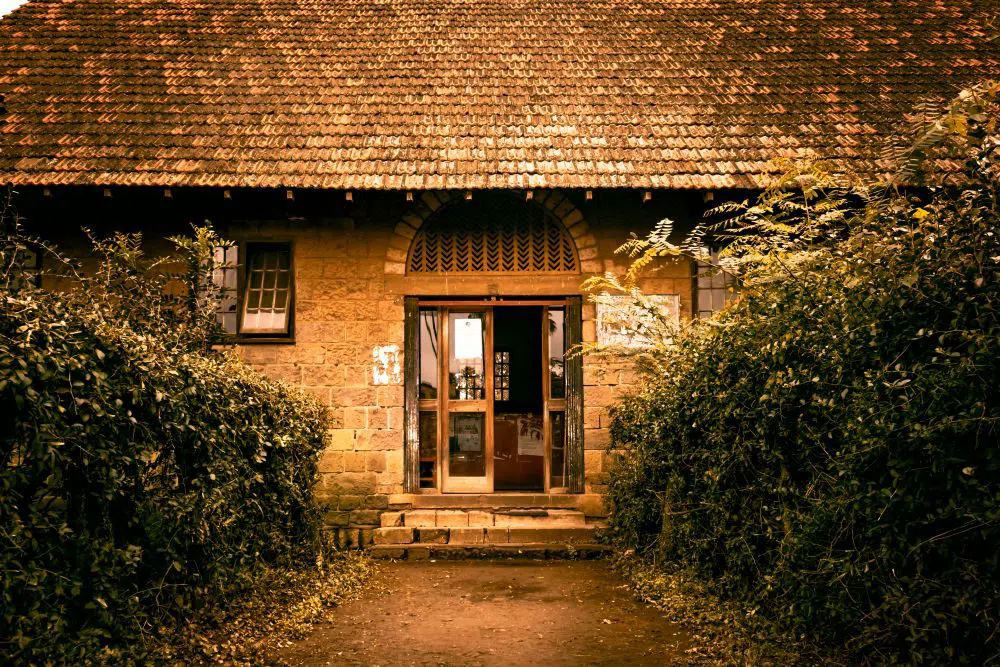
Both are ordinary neighbourhood libraries doing a public job well. They are not attractions, and the correct way to visit is quietly and by arrangement.
The newest serious reading room
The Médiathèque at the Alliance Française de Nairobi (city centre) was inaugurated in November 2024 and is the newest properly resourced reading room in the city. The campus is the largest Alliance Française on the continent and is built for public programming, with a monthly arts calendar, so groups are fine here.
What makes it worth an hour even if you have no interest in the French collection is the Kenyan literature holding and the virtual museum alongside it. Visiting and reading on site are free; borrowing requires membership. It is also the most comfortable place in the centre to sit down with something you have just bought two streets away.
Building a day around it
A full day splits into two halves. Do the centre in the morning while the shops are open and the light is good: Prestige, then Halfpriced Books, then Nuria, then the Médiathèque to sit down. All of that is inside the central grid and walkable, ten minutes at most between any two of them, and you will spend more time in the shops than between them.
Then pick one afternoon direction. North to Ngara for Soma Nami is the short version: roughly a twenty-minute walk from the centre, or a few minutes and small change in a matatu. East to Eastlands and Kaloleni is the longer and more rewarding version, and needs to be arranged in advance. Budget thirty to forty-five minutes each way by road, and considerably more if you attempt it between 4.30pm and 7pm, when traffic out of the centre solidifies.
If you would rather stay on one side of town, the Greenhouse Mall branch of Soma Nami plus Maktaba Kuu makes a coherent Ngong Road afternoon with no city-centre driving at all. For where to base yourself, the Nairobi hotel search covers both the centre and the Westlands and Ngong Road sides; the broader Nairobi guide has the rest of the city's context.
Practical notes
Most city-centre bookshops keep roughly 9am to 5pm on weekdays and close early on Saturday (Prestige shuts at 3pm), and Sunday is effectively a write-off for the shops. Libraries run later: Maktaba Kuu to 6.30pm on weekdays. Morning is the better half of the day for everything here, because the reading rooms have desks free, the shops are quiet, and you avoid the evening traffic.
Mobile money is near-universal and accepted everywhere on this list, but carry some small notes anyway. The KSh 20 library entry is exactly the sort of transaction where coins and small paper are easier for everyone. A realistic day costs KSh 20 in entry, KSh 1,000 to 3,000 in books if you are buying two or three second-hand plus one new Kenyan title, and around KSh 300 for coffee at Soma Nami.
The central cluster is a walking exercise and should be treated as one; you do not need a car for it. For Ngara, Ngong Road or Makadara, use a ride-hailing app or a matatu, and plan the return leg before the evening peak. Traffic, not distance, is what costs you time in this city.
Ask before photographing anyone reading. In the public libraries especially, people are working, applying for jobs, revising. Give children priority at Kaloleni. Email ahead for anything involving more than a handful of people at the public libraries, and book ahead at Soma Nami for parties over eight. None of these places are difficult; they simply have a job to do that is not tourism.
Bring a tote you can fill, because the second-hand prices will tempt you further than you planned, and a list of what you already own. In a buy-back shop, duplicates are the standard mistake.