Speciale Nairobi
Visiting Nairobi's Karen Blixen Museum in October
What the house contains, how the compulsory guide works, what a ticket costs, and the Karen stops that fit around an October morning.

Di Lukas BrandtNairobi neighbourhood by neighbourhood, on foot and by matatu

The house at the Karen Blixen Museum in Karen still holds her furniture, her kitchenware and the machinery from the coffee farm it sat on, and a resident guide walks you through all of it. The ticket is sold only on the NMK eCitizen portal, and the gate takes no cash. Behind the 1912 bungalow, the long low Ngong Hills ridge runs along the horizon.

What the house holds
The building is grey cut stone under a red tiled roof, with dark green shuttered windows and a deep wrap-around veranda. In front of it are a lawn and old flame trees. The hills behind the roofline are the same ones Blixen looked at from the veranda.
Inside are the rooms she lived in, furnished with Blixen-era pieces, her kitchenware and the coffee-farm machinery that worked the land outside. A resident guide takes you round, the tour is compulsory, and the ticket price covers it. Large parties are split between several guides, so you walk the rooms in a smaller group than the one you arrived with.
Photography is banned inside the house and the kitchen, so cameras come out on the veranda, on the lawn and under the flame trees. Allow an hour for the whole visit.
Organizza il tuo viaggio a Nairobi
Prezzi in tempo reale dai nostri partner di prenotazione.
Cancellazione gratuita su molte camere. Potremmo ricevere una commissione quando prenoti.
Buying the ticket before you leave your hotel
Entry is KSh 550 for a citizen adult, KSh 1,170 for an African resident and KSh 2,341 for a non-resident adult. Children pay less. Payment runs through the NMK eCitizen portal, and there is no cash desk at the gate.
Buy it before you set out. The WiFi at the gate is unreliable, and a ticket bought at your hotel takes away the one thing that can hold you up on arrival. Discounts for groups, students and school parties are arranged directly with the museum ahead of the visit.
Night tours run from 18:00 to 22:00, and only for parties of 10 or more, so a smaller group cannot buy into one.
Booked half-day trips that pair the museum with the giraffe platform and the elephant nursery run seven days a week. The guided tour comes with the museum ticket either way, and all a booked trip adds is the driving between the three gates.
Best time to go in October
Three fixed opening times set the shape of an October day in Karen, and everything else fits around them.
The Sheldrick Wildlife Trust Nairobi Nursery opens for one hour only, 11:00 to 12:00, and you need to be at the KWS Mbagathi (Workshop) Gate on Magadi Road by 10:30 to clear it in time. If the nursery is in your plan, build the day around that hour and put the museum after lunch.

An early game drive in Nairobi National Park slots in before a late-morning museum visit, since the park wraps the Karen side of the city and shares the Mbagathi Gate with the nursery. The Giraffe Centre (AFEW Kenya) is open 09:00 to 17:00 daily, so it works at either end of the day.


For the hot middle of the day, afternoon tea at Hemingways Nairobi (54 Mbagathi Ridge) runs daily from 15:00 to 17:00, five minutes from the museum. Its terrace looks onto the same hills as Blixen's veranda.

The park and the elephant nursery
The park is yellow grass plain with rhino and giraffe in the foreground and the city's office towers on the skyline behind them. You see it from a vehicle, a van or a 4x4. All fees are paid online on KWSPay, with no cash taken at any gate and a 5 per cent gateway charge added. Rates are set by KWS, and the non-resident adult tariff is the steep one.
The nursery is a red-dust mud wallow ringed by a rope cordon, with keepers in green dungarees holding oversized milk bottles while orphaned calves jostle and spray themselves. It is pre-booked only and the daily capacity is capped. Book direct with the Trust by email, naming every adult and child, because the Trust says only its own confirmations are valid at the gate. You pay a Trust entry donation plus a separate KWS park gate fee, both online. It runs every day except 25 December.
Giraffes five minutes from the museum gate
The Giraffe Centre is a five-minute drive away, built around a raised circular wooden viewing platform set at giraffe head height. Rothschild's giraffes lean in over the rail with their long purple tongues out while visitors hold buckets of brown feed pellets. Entry is KSh 400 for a resident adult and KSh 1,500 for a non-resident adult, with children at KSh 200 and KSh 750 and under-3s free. Payment is cashless.
AFEW Kenya runs it rather than KWS, and the entry fee funds its schools conservation programme.
Giraffe Manor next door is an ivy-clad 1930s stone manor with mullioned windows, and the photograph everyone knows, a giraffe's head and neck through an upstairs sash window above a laid breakfast table, belongs to the 12 rooms inside. Only house guests get that, and the manor takes no day visitors for tours or tea. Rates include all meals, house drinks and Giraffe Centre entry, and day trippers are sent to the Giraffe Centre.

Lunch on the old farm

Karen Blixen Coffee Garden & Cottages, run by the Tamarind Group as Tamambo, is a two-minute drive from the museum gate on land that was part of the same farm. The 1908 Swedo House is stone under a shingled roof, with white-clothed tables set out under enormous old fig and jacaranda trees on one of the oldest formal lawns in Kenya. It opens daily from 07:00 with the kitchen on until 22:00, and it has five separate dining areas plus function lawns. Book ahead for weekend lunch. Mains run KSh KSh KSh.
The Talisman (Ngong Road) is 10 minutes from the museum, open Tuesday to Sunday and closed on Mondays. The courtyard is a walled garden strung with lanterns, and the rooms off it are low stone and timber with mismatched antique furniture, kilim cushions and an open fireplace. Reservations are strongly advised, and essential for Friday and Saturday evenings and for Sunday lunch. KSh KSh KSh.


Cultiva Farm (Pofu Road) is chef Ariel Moscardi's kitchen on a Karen smallholding, with an open kitchen behind raw timber counters and vegetable beds beside the outdoor tables under mature trees. It is the best serious food within a short drive of the museum. Hours are Tuesday 12:00 to 22:00 and Wednesday to Sunday 08:00 to 22:00, closed Monday. Small tables are fine and coach parties are not taken, so book ahead. KSh KSh KSh.
Afternoon tea at Hemingways costs KSh 6,000 per serving, which serves one to two people. The hotel is a white colonial-style all-suite building above manicured gardens, and tea is laid out on an open terrace with scones and tiered cake stands. Terrace seating is limited, so reserve it. KSh KSh KSh.
Workshops and galleries around Karen
Kazuri Beads Women's Factory (off Langata Road) sits on a slice of the original Blixen estate. The workshop is long and open-sided, with rows of women rolling and hand-painting clay beads at wooden benches and trays of drying beads stacked beside hot kilns. It employs 350 women on fair wages with healthcare. The guided tour is free and takes an hour including the shop, and a small tip or donation is appreciated. Phone or email the Karen workshop before you come.


Utamaduni Craft Centre (Langata) is a converted colonial house with 18 small craft rooms off its verandas, packed with carved soapstone, baskets and masks, and a green garden all round. It opens 09:00 to 18:00 daily. Entry is free. Shop prices are fixed and higher than street markets, so there is no bargaining to do on a timed stop.
Matbronze Art Gallery, Foundry & Café (Kifaru Lane, Hardy) was founded in 1987 and still casts on site. The garden holds life-size bronze wildlife, elephants, giraffe and buffalo heads, with café tables set among them and a working lost-wax foundry at the back, so you can watch the pouring rather than only look at the finished pieces. Walk in free, Monday to Friday 08:00 to 17:00, Saturday 08:00 to 17:30 and Sunday 09:00 to 17:30. Café seating is limited. Twenty minutes covers it.

Forest, ridge and the grave
Oloolua Nature Trail is a shaded earth trail through indigenous forest and tall bamboo stands to a small waterfall and a dripping cave mouth, with monkeys crossing overhead. It is open daily 09:00 to 18:00, including public holidays, and pays through eCitizen at KSh 200 for a citizen adult, KSh 100 for a child and KSh 400 for a non-resident, with bike hire at KSh 300. The cave path is slippery, so wear proper shoes. It pairs well with the short forest trail inside the museum grounds.

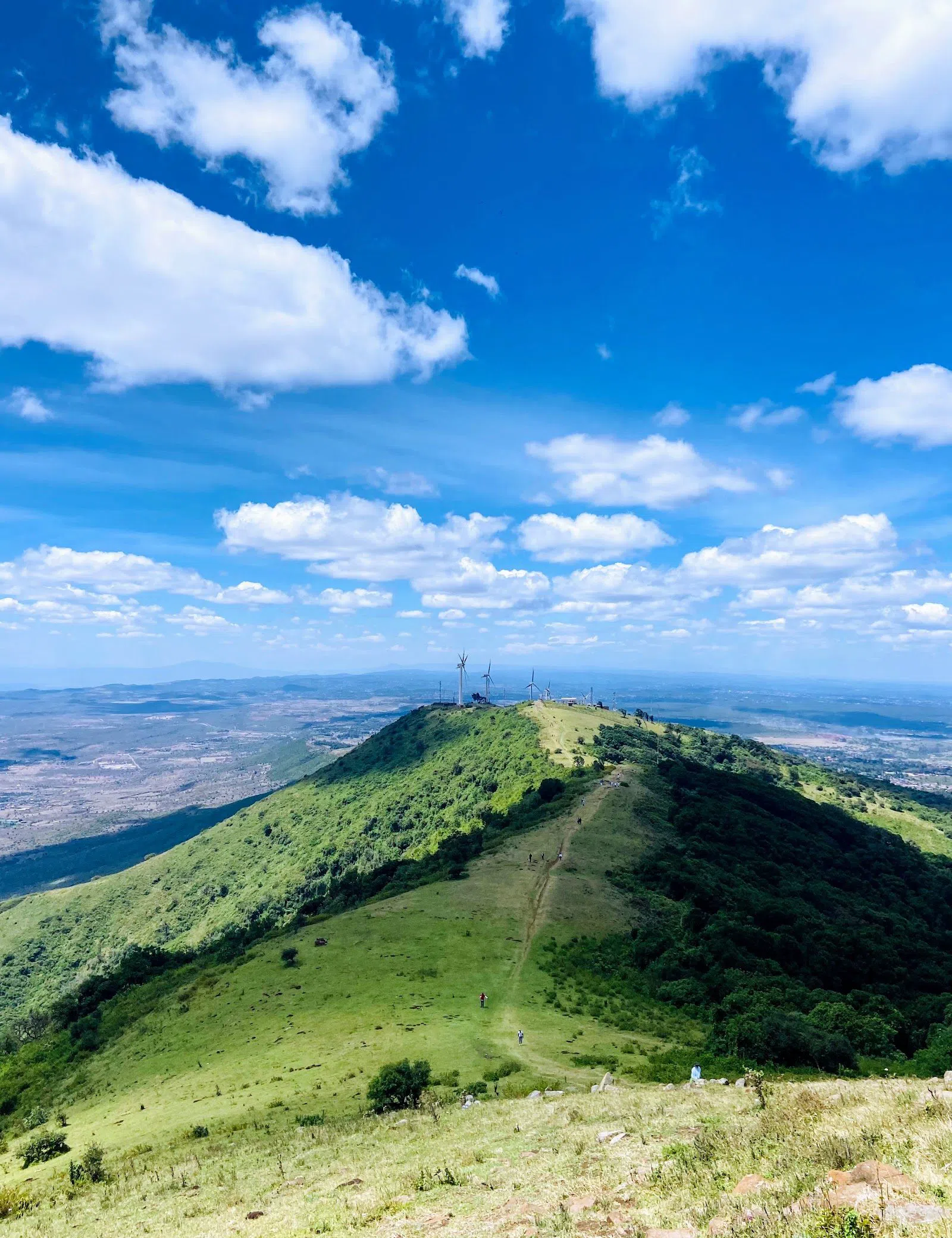
Ngong Hills Forest Reserve is the ridge in every photograph taken from the museum veranda, and walking part of it gives you the other side of that view. The ridgeline is green and knuckled, with white wind turbines spaced along the spine, the Rift Valley dropping away on one side and the city's haze on the other. It opens 06:00 to 18:00. The gate is KSh 200 for citizens, KSh 400 for residents and KSh 600 to 650 for non-residents, paid by M-Pesa or card, with no cash taken. A guide costs KSh 1,500 to 2,000 and an armed KFS or KWS ranger escort KSh 4,000 per group. Solo walking is not advised, so take the ranger, particularly on a quiet weekday.
Denys Finch Hatton's Grave is 20km from the museum on the eastern slopes of the Ngong Hills, a 14-foot pale stone obelisk inside a small fenced enclosure on an open grassy slope with the ridge rising behind it. The drive is 45 to 60 minutes each way, which makes it a half-day rather than an add-on to the museum morning. The land is private, so ring the caretaker ahead to arrange access. Entry is KSh 500 per person in cash, which goes towards maintaining the monument, and there is no card machine on the hillside.

Glassblowing at Tuala
Kitengela Hot Glass (5 Glass Lane, Tuala, off Magadi Road) sits on the edge of Nairobi National Park and is the most hands-on stop in the area. The compound runs on mosaic paths and bottle-glass walls, with a swaying rope suspension bridge over a gorge and blowers turning glowing recycled glass at the furnace. The bridge is not for the nervous.

It opens seven days, with glassblowing Tuesday to Saturday 08:00 to 16:30 and Sunday and Monday 09:00 to 13:00. Hands-on sessions cost KSh 1,500 to 3,000 and carry a minimum age of 10. The café and shop are charged separately.
Is the museum worth the hour
It suits a visitor who wants the actual house, with her furniture and her farm machinery in it, and a guide doing the explaining. The cost is an hour of your morning, a ticket bought online beforehand and a camera left in your bag indoors.
Before you go
The Talisman and Cultiva Farm close on Mondays, and the elephant nursery runs every day except 25 December. Buy the museum, forest trail and park tickets online before you leave your hotel, book the nursery by email with every name on it, and ring ahead for the grave and the bead workshop.
See the Nairobi guide and the Nairobi hotel search.
Prima di partire
How much does it cost to visit the Karen Blixen Museum?
Entry is KSh 550 for a citizen adult, KSh 1,170 for an African resident and KSh 2,341 for a non-resident adult. Children pay less, and the guided tour by a resident guide is included in the price.
Do you need to buy a ticket in advance?
Yes. NMK sells tickets only through its eCitizen portal, and there is no cash desk at the gate. Buy before you leave your hotel, because the WiFi at the gate is unreliable.
Can you take photographs inside the house?
No. Photography is banned inside the house and the kitchen, but you can shoot the veranda, the lawn and the flame trees in front of the bungalow.
How long does a visit take, and what fits around it?
Allow an hour. The Giraffe Centre is a five-minute drive away and Tamambo at the Karen Blixen Coffee Garden is two minutes from the museum gate, so a half day covers all three.
Can you visit the museum in the evening?
Night tours run from 18:00 to 22:00, but only for parties of 10 or more. Arrange one with the museum ahead of the date; smaller parties cannot join.