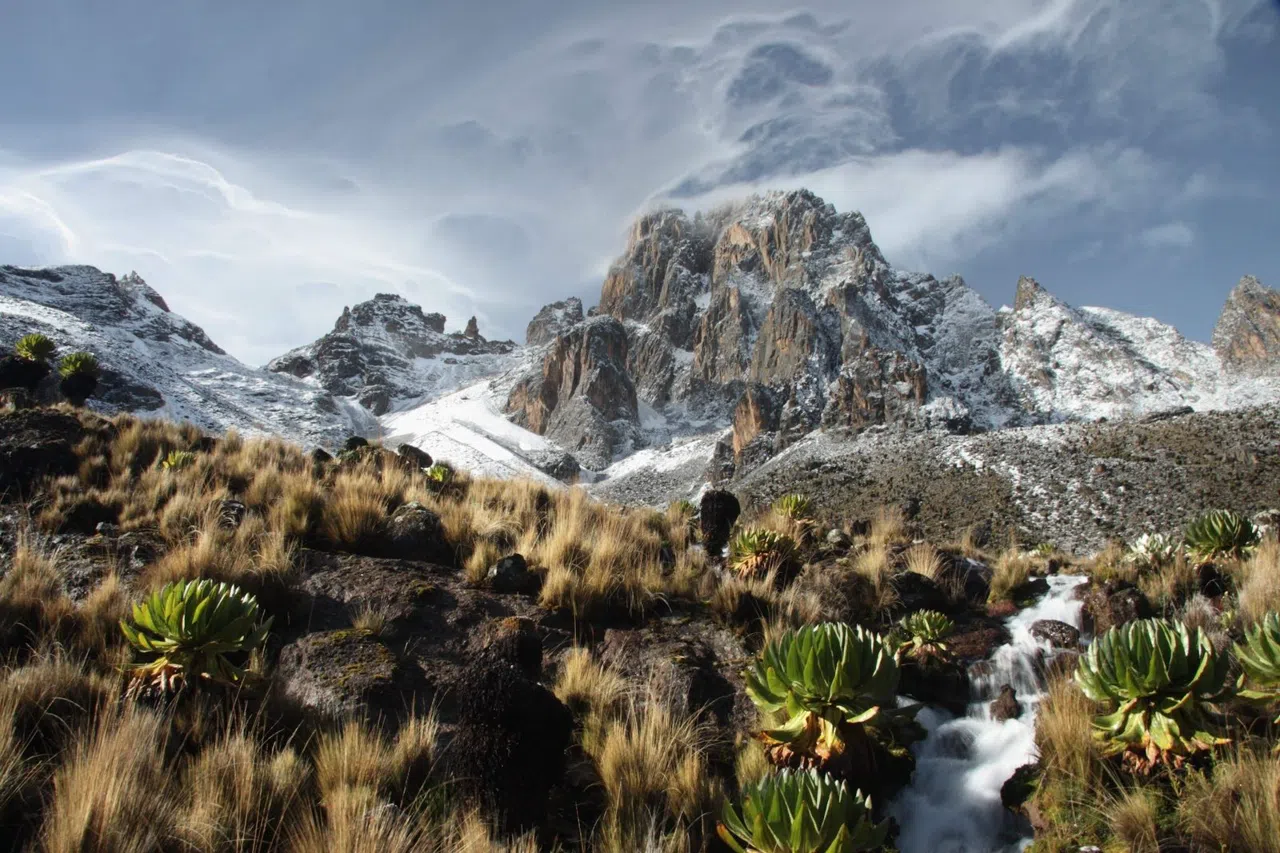
At three in the morning on the north side of the mountain the water in your bottle has a skin of ice on it, the guide is counting head torches by the bunkhouse door, and nobody is talking. Four hours later you are standing on a rock platform at 4,985 m with a floor of cloud below you and two black summits above, close enough to pick out the gullies on them. November is not the month most people pick for this, and that is a large part of why it is a good one.
What Mt. Kenya actually is
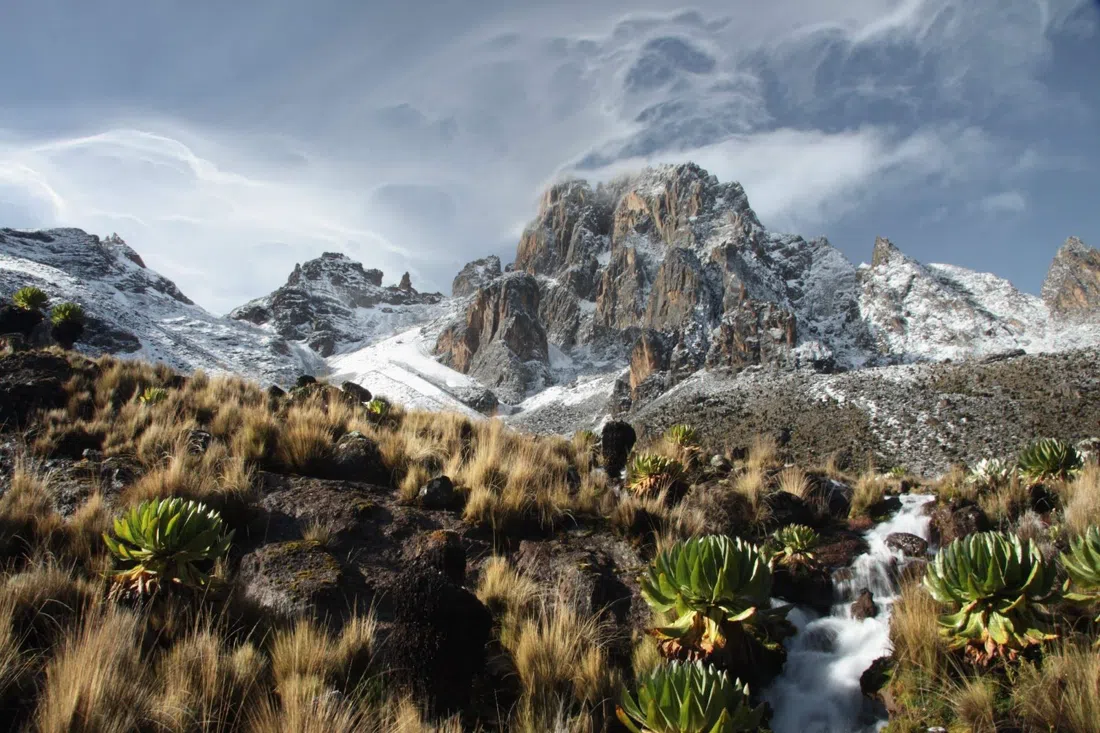
Mount Kenya National Park & Forest Reserve (Kenya Wildlife Service, central Kenya, roughly 200 km north of Nairobi by road) is an eroded volcano standing almost exactly on the equator, with ice on it. It is a UNESCO World Heritage site, and the listing rests on a sequence rather than a single view: cedar and podocarpus forest with elephant paths cut through it, then bamboo, then open moorland where giant groundsel and lobelia stand about like furniture, then rock, scree and frozen tarns above 4,500 m. You walk up through four climate zones in two days and back down through them in one.
The practical shape of a trek is this. You drive from Nairobi to a trailhead town, sleep low, walk five to seven hours a day with a guide and porters, sleep two or three nights on the mountain, get up in the dark for the summit, and come off the other side. The honest minimum is four days. Five is better, six is what you book if you have never been above 4,000 m and would rather not find out the hard way what altitude does to you. Nobody sensible does this as a long weekend from the capital and nobody does it in a day.
The summit almost every visitor means is Point Lenana (4,985 m, the third peak and the trekkers' one). It is a walk-up rather than a climb, with no ropes and no technical skill needed, but it is nearly 5,000 m, and the pre-dawn push is done in temperatures that can sit near minus fifteen. Guides run groups at roughly one to four, so a party of eight arrives on the mountain with two guides plus porters. There is no separate summit permit; it is covered by park entry and is included in every multi-day package.
The peaks you look at and leave alone
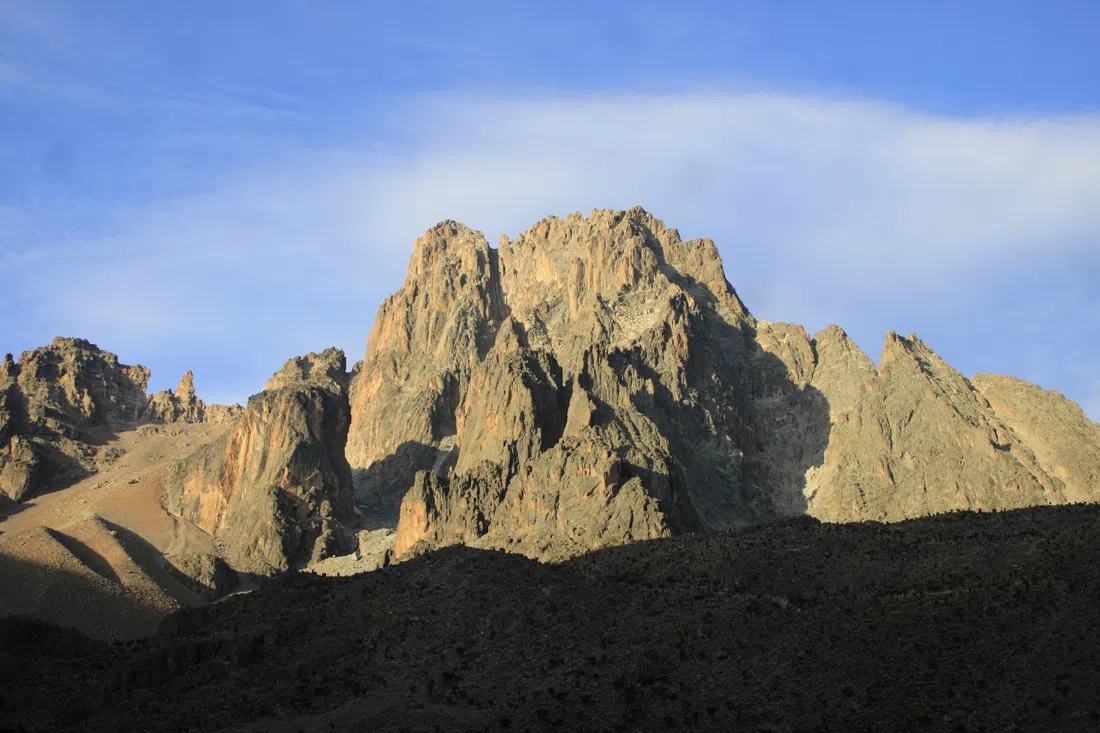
Above Lenana are Batian and Nelion (5,199 m and 5,188 m, the twin volcanic plugs at the centre of the mountain). These are rock climbs, not hikes. Nelion's easiest line is a multi-pitch route with a bivouac shelter on top, and it is guided in ropes of one or two clients per climbing guide. A fit group can trek to the base together, but only the climbers go up. Guided technical ascents run roughly USD 2,000 to 2,600 per person over eight or nine days, against about USD 900 to 1,600 for a walking route. For almost every reader the correct relationship with Batian and Nelion is to stand on Point Lenana at sunrise and look at them.
Two gates, and how November narrows the choice
November sits in the short rains. That does not close the mountain; it changes which side of it you should be on.
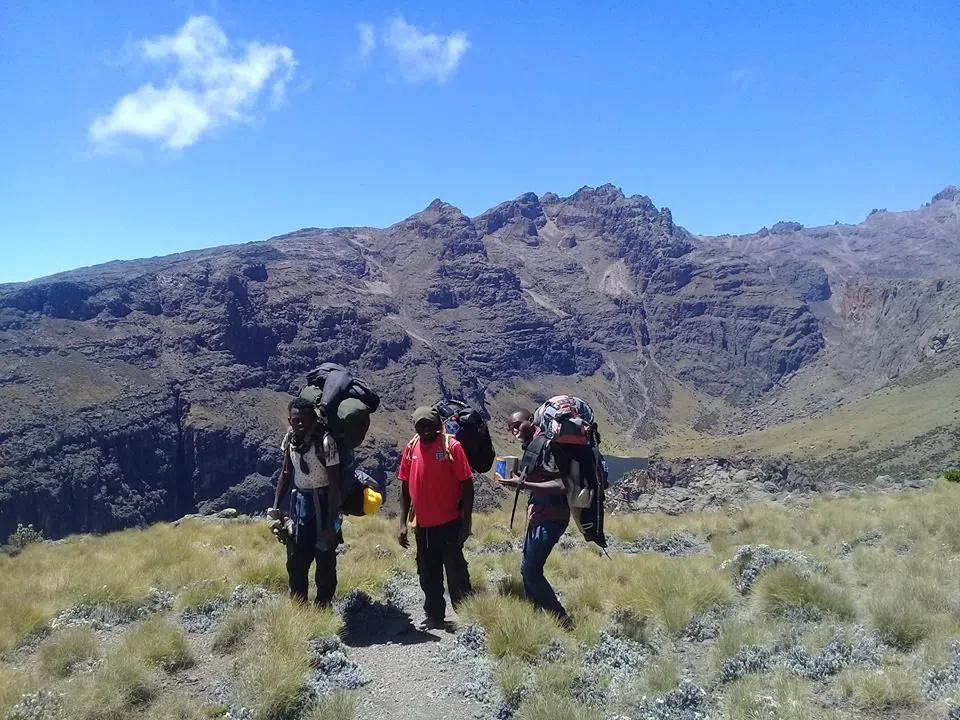
Sirimon Gate and the Mackinder Valley (north-west side, the closest gate to Nanyuki) is the driest, best-drained and least eroded approach, which makes it the sane choice for a November trip. The drive in from Nanyuki is short enough that most operators use 2WD to the roadhead, and the gate handles trekking groups routinely, so a full party in one vehicle is no trouble. It is also the standard descent on the classic traverse: up the east side, down Sirimon.
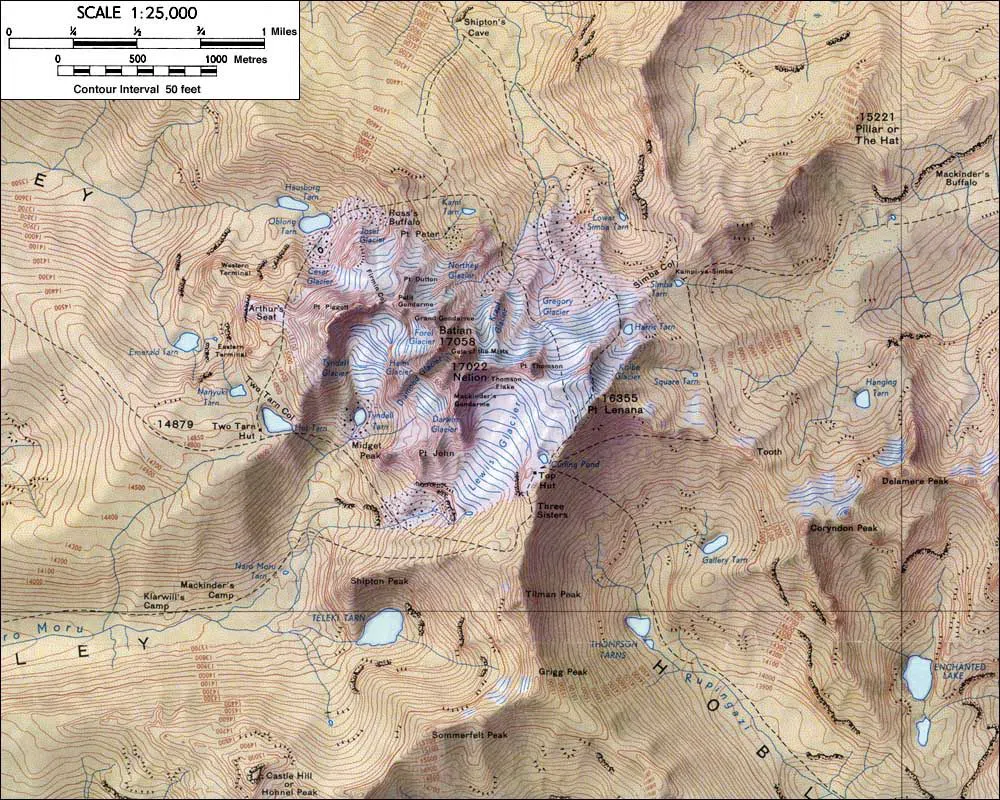
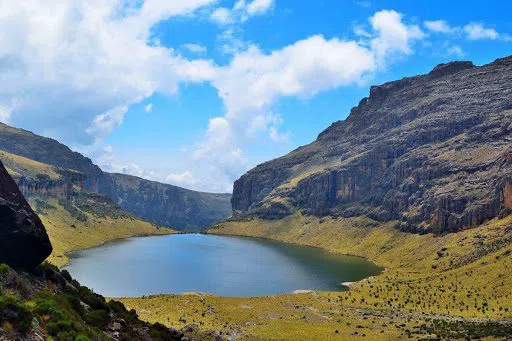
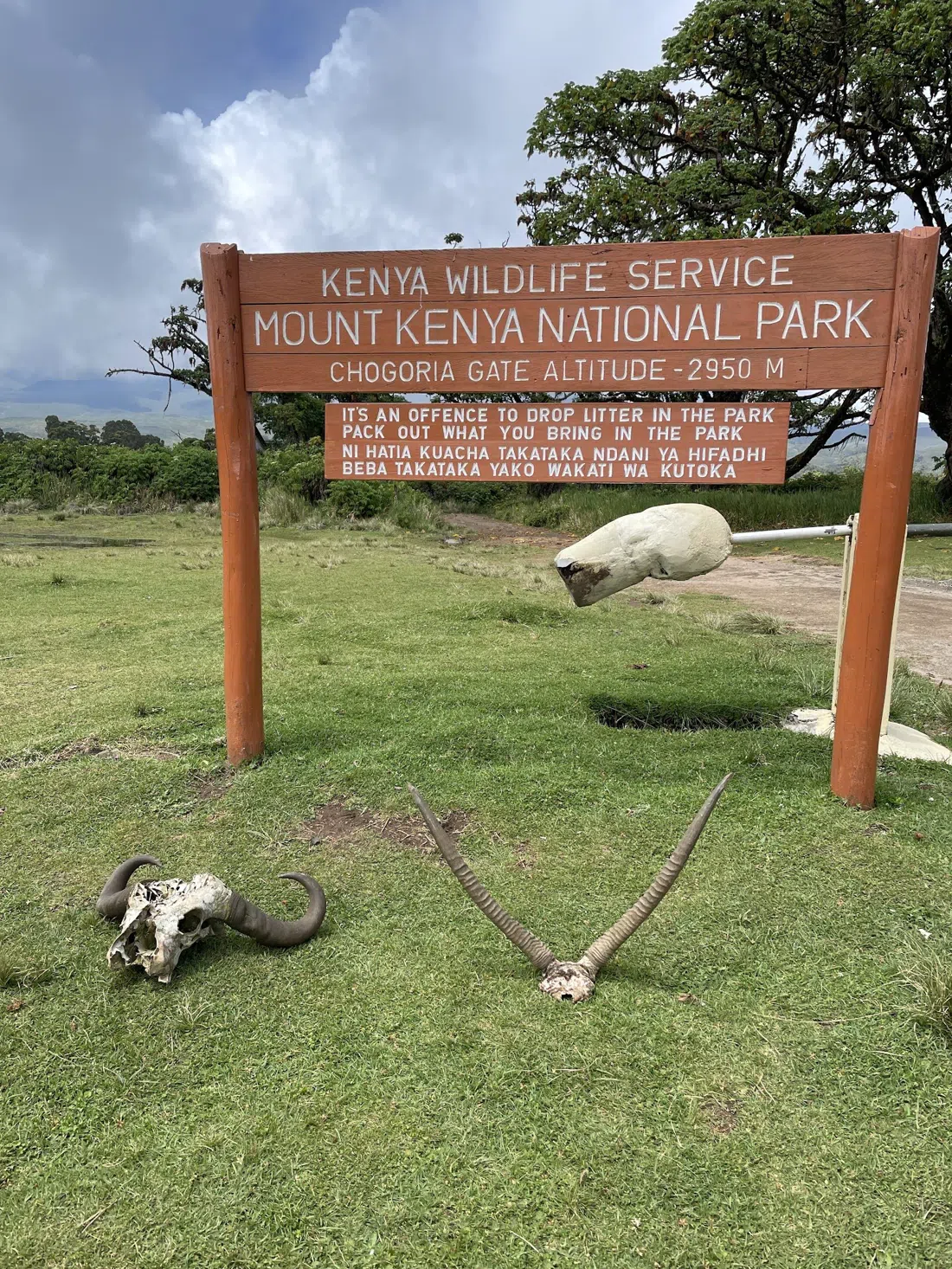
Chogoria Gate and Nithi Falls (eastern approach, above Chogoria village) is the scenic side and the reason people do the traverse at all. The forest belt here is where elephant and buffalo sign is most obvious, and the falls are a short detour from the track. The catch is the track itself: it needs high-clearance 4WD, so a large group arrives in a convoy rather than one bus, and the vehicle transfer from the village is the real cost, usually bundled into a package. The other catch is specific to this month. The descent from the rim into the basin holding Lake Michaelson and The Temple (Gorges Valley, Chogoria side) is steep and slippery, and that is exactly the section rain makes unpleasant. Michaelson is the most photographed spot on the mountain and worth the effort, but it is wild camping only, with no buildings and no facilities of any kind, so your group size is limited by what your crew can carry in and pack out.
The third option is the Naro Moru route from the west, the fastest way up and the one that includes the section known without affection as the Vertical Bog. In a wet month, read that name literally.
My recommendation for November: go up Chogoria if your crew is experienced and you accept a muddy rim descent for Michaelson, or keep it simple and do Sirimon both ways. Either way, come down Sirimon.
Where you sleep on the mountain
The huts are bunkhouses, not lodges, and they are the real constraint on any itinerary.
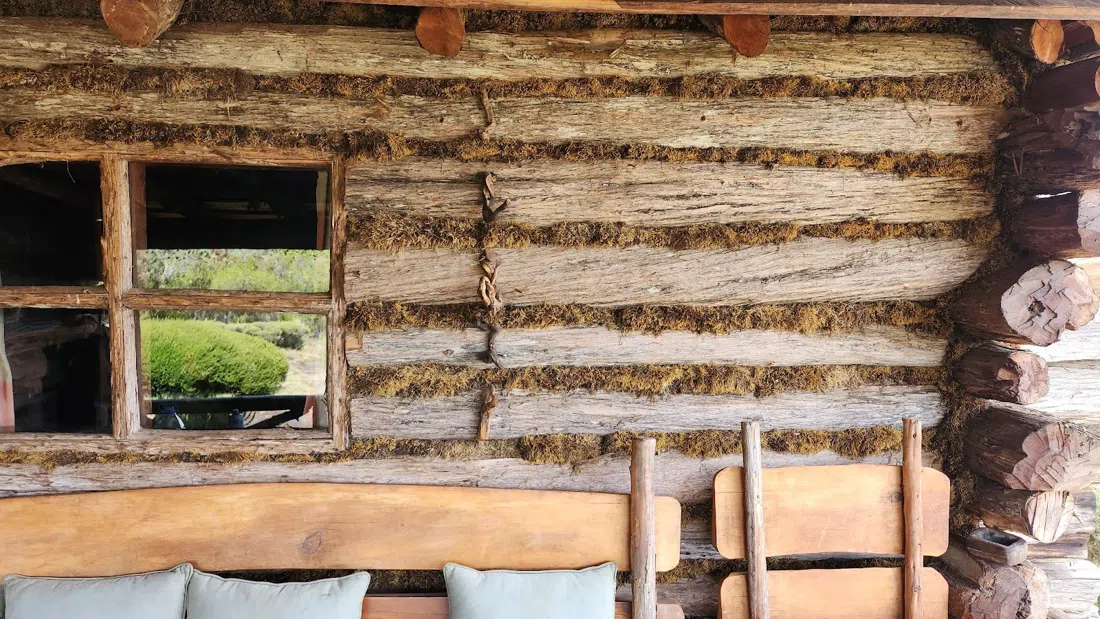
Old Moses Camp (Judmaier Camp, 3,300 m, first night on Sirimon) has dormitory space for around sixty across bunk rooms plus a large tent lawn, so it absorbs several groups a night; it is privately run rather than KWS, and it is the last place with reliable running water for a while. Bunks run roughly KSh 2,500 to 3,500 per person per night, less to camp. This is also the acclimatisation stop that decides whether your summit night works, so resist any operator who wants to push you straight past it.
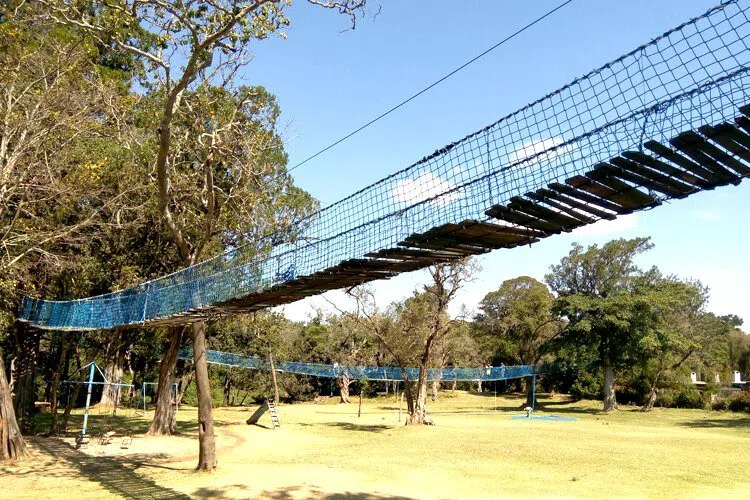
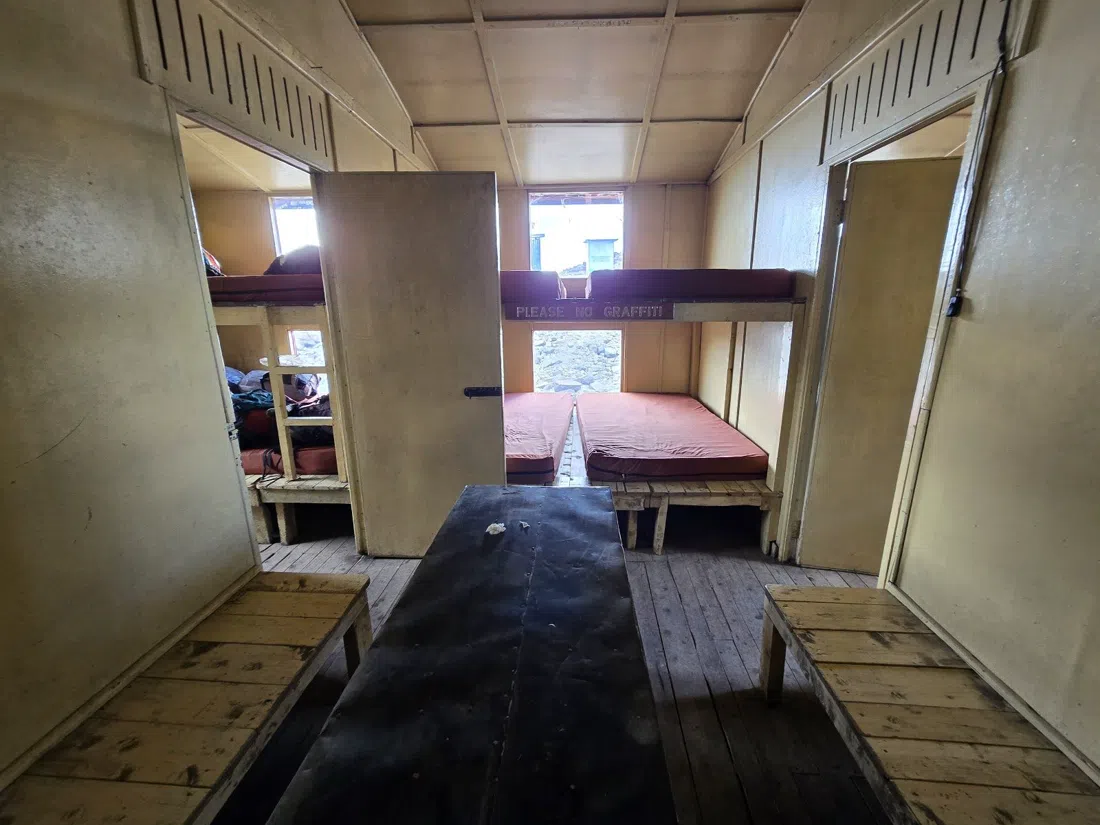
Shipton's Camp (4,200 m, at the head of the Mackinder Valley) sleeps up to about eighty in dormitories with tent space alongside, and must be pre-booked; in peak season large groups can fill it. Roughly KSh 3,000 to 4,000 for a bunk. There is a tap and a pit latrine, no fires and no heating, which is why your sleeping bag rating matters more than your itinerary. This is the launch pad for the 3 a.m. Lenana push and the base for climbers working the north face.
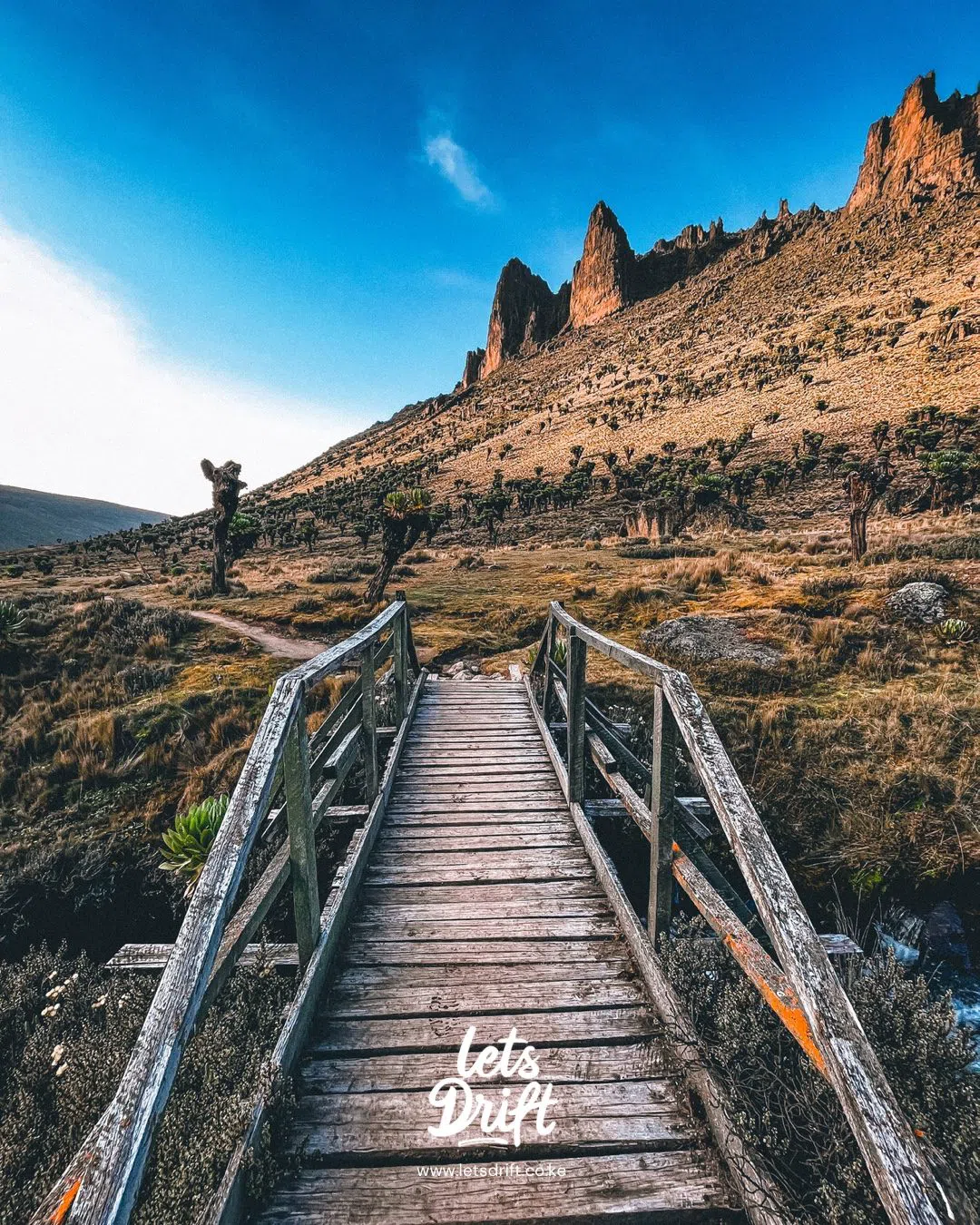
Austrian Hut (Top Hut, 4,790 m, directly below the peaks) is the highest shelter in Kenya, opened in 1973, staffed by KWS, and has three rooms sleeping about thirty in total, too small for a big party to rely on without written confirmation. About KSh 2,000 to 3,000 per person. It shortens summit morning to under an hour, and it is only worth using if you are already properly acclimatised. Sleeping at 4,790 m is how altitude sickness ends trips that were going fine.
On the east side, Meru Mount Kenya Bandas (Chogoria Gate, 3,000 m) is the civilised way to start: four self-catering cottages plus camping, hot showers, a fire and now a small restaurant, at an altitude that does useful acclimatisation work before you walk a step. It takes one trekking group comfortably, two at a squeeze, and roughly KSh 3,000 to 5,000 per person self-catering. The bandas ask for a fortnight's notice in the busy months of January to March and July to October; November is quieter, but book anyway.
Fees, crew and what the door really costs
The most common trip-ruining mistake on this mountain has nothing to do with fitness. Park fees are now cashless and paid in advance through the KWS portal on eCitizen, so turning up at a gate with dollars in your hand no longer works. The non-resident conservation fee is approximately USD 52 per adult per 24 hours on the 2025/26 tariff, children about half, with camping and hut nights charged on top and a small rhino-sanctuary fee at Sirimon and Naro Moru. Every trekker must be booked through the park per person, and in practice must be accompanied by a registered guide. Porters and crew are paid separately.
That is why most people book a package. Mount Kenya Guides and Porters Safari Club (Naro Moru, western side) is the long-standing local co-operative and the most direct way to get money to the people carrying your bag: it pools Naro Moru's guides, cooks and porters, so a party of a dozen can be crewed at short notice on Sirimon, Chogoria or Naro Moru, at around USD 120 per person per day all-in, covering guide, porter, meals, transport and accommodation. Its cottages at the base are basic but serviceable, and nobody should pretend otherwise.
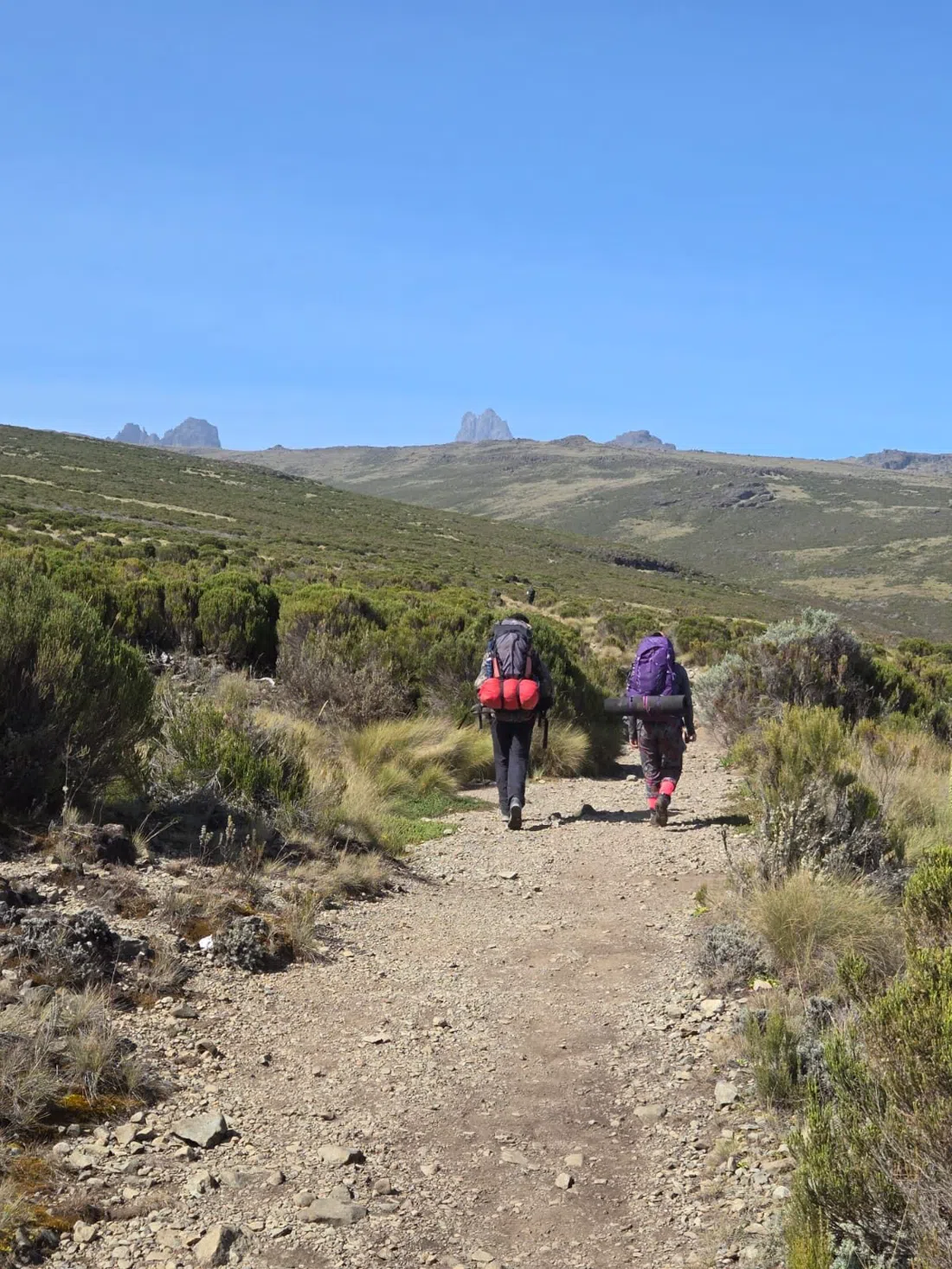
Naro Moru River Lodge (Naro Moru) is the historic base for Mount Kenya climbs and the easiest single place to sort beds, gear hire and crew in one stop: 34 rooms, seven self-catering cottages, a campsite, and its own four-day Point Lenana climbs with guides, porters and gear. Rooms run roughly USD 80 to 160 depending on category, camping far less.
The gate is not the bottleneck. The huts and the crew are, and both are booked weeks out rather than on the day. A guided multi-day option exists and can be booked ahead from this page; those bookable trips carry 46 traveller reviews between them, with the top-rated one at 5.0 out of 5 from 17 reviews, and they start from USD 900 per person. That figure sits at the bottom of the same band as a self-assembled walking trek, which tells you the packages are a convenience rather than a premium. The saving from doing it yourself is mostly in your own time.
Coming off the mountain
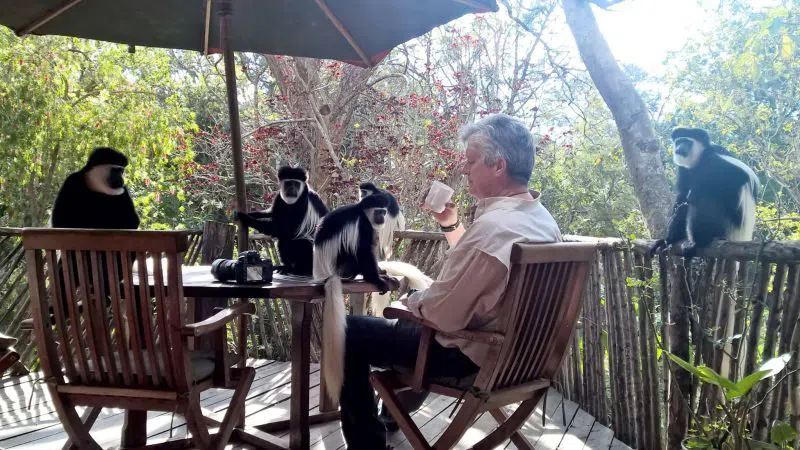
Four days in a bunkhouse earns a soft landing. Trout Tree Restaurant (just off the Nyeri to Nanyuki road) is the standard celebration lunch on the drive back: pond-raised trout char-grilled to order, roughly KSh 1,500 to 3,000 for a main, with resident colobus and tree hyrax as the floor show. It seats about sixty in total, so a group should book; weekend wood-fired pizza and a children's menu make it workable for mixed parties.
Fairmont Mount Kenya Safari Club (Nanyuki, about 15 km from the airstrip and 200 km from Nairobi's airport) has been the region's grand hotel since 1959: an 18-hole course, a spa, and the clear mountain view the trek itself never quite gives you. Roughly USD 300 to 600 per room per night, dining and activities extra. It takes groups readily and handles events for up to 300, so it is as plausible for a company trip as for two people who have run out of clean clothes.

Quieter and stranger, Rutundu Log Cabins (northern slopes above Nanyuki) is exclusive-use only: two cabins, one group at a time, rainbow trout in Lake Rutundu and a rowing boat to reach them. You bring all your own food and drink, pay a premium per-person rate direct, and pay park fees on top. It works as either a pre-trek acclimatisation night or a post-trek hide, and it is where Prince William proposed, which the owners are entitled to mention.
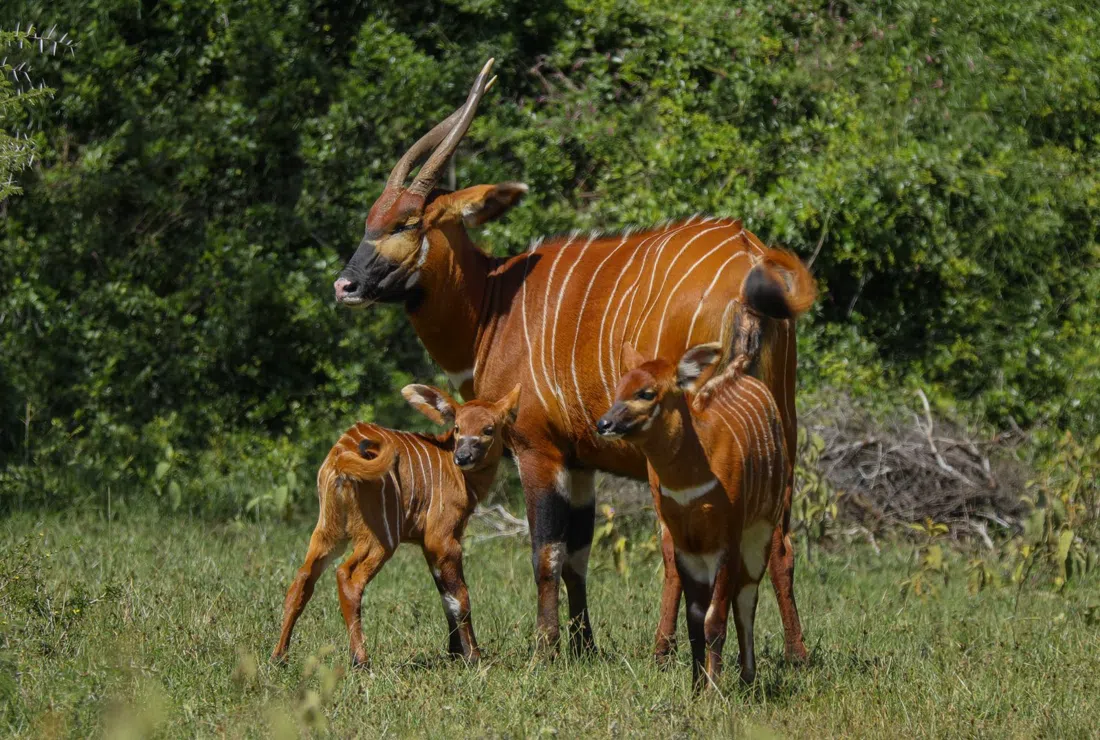
If the weather wins a day, the Mount Kenya Wildlife Conservancy Animal Orphanage (Nanyuki) is the one effectively weather-proof fixture in the area, open daily 9:00 to 16:30 with guided tours, USD 40 for non-resident adults and USD 20 for children aged 6 to 12, under-6s free, KSh 1,000 for East African citizens. The mountain bongo breeding and rewilding programme is a real conservation story about an antelope now down to a few dozen in the wild, not a petting zoo.
Best time to go and what November gives you
The two established dry windows are January to March and July to October, and that is when the huts fill with groups. November falls in the short rains, and the trade-off is straightforward: fewer people in the bunkhouses and on the summit path, in exchange for afternoon cloud, wet forest sections and a genuine chance of walking the last two hours of a day in rain. Mornings are frequently the clear part of the day, which suits the schedule anyway, since treks start early and camps are reached by mid-afternoon.
Plan around that. Walk in the morning, accept that the view from the moorland may be a wall of grey by four o'clock, and keep the Chogoria rim descent for a day you can see. Summit morning is non-negotiable: leave around 3 a.m. so you are on Point Lenana for sunrise, before the cloud builds. Waterproofs that actually work, gaiters, and a sleeping bag rated well below zero are worth more this month than any other piece of kit.
Is it worth it
Yes, with conditions. If you can walk six hours a day for four days in a row and you accept that altitude, not fitness, decides the outcome, Point Lenana is one of the most accessible near-5,000 m summits anywhere, and the walk up to it through forest, moorland and glacial valley is the actual prize. It suits small groups of friends, fit solo travellers who are happy to be crewed by a co-operative, and couples who want a hard week rather than a beach one. It does not suit anyone on a tight schedule, anyone who has never slept above 3,000 m and refuses an extra acclimatisation night, or families with young children: the huts are cold dormitories with pit latrines, and summit night is a long, dark, freezing slog. If that last part is a dealbreaker, the orphanage, the lodges and the trout are a decent two-day version of the same region with none of the suffering.
Practical notes
Getting there. Everything starts in Nairobi. It is roughly 200 km by road to the Nanyuki side, a half-day's drive once you are clear of city traffic, or a short flight to Nanyuki airstrip if your operator meets you there. Sirimon's roadhead is reachable in 2WD; Chogoria's track needs high-clearance 4WD. Nearly every package includes the transfer, and if yours does not, ask why.
Beds at either end. You will want a night in the capital before and after; the Nairobi hotel search covers the airport-side and city options, and the Nairobi guide is the place to look for what to do with the spare day while your legs recover.
Money. Park fees are prepaid online through the KWS portal. Do this before you leave home, not at the gate. Carry Kenyan shillings in cash for hut bunks, tips and roadside stops; crew tips are cash and expected, and hut staff do not take cards.
Budget, roughly. Park conservation fees at about USD 52 per adult per 24 hours, hut bunks at KSh 2,000 to 4,000 a night, an all-in crewed day at around USD 120 per person, or a packaged walking trek from USD 900 per person. Add gear hire if you are not bringing your own boots and bag.
Timing. Book huts and crew weeks ahead rather than days. Shipton's must be pre-booked and the Austrian Hut's thirty beds go to whoever confirmed first. Build in one spare day. On this mountain the spare day is the difference between a summit and a story about how far you got.