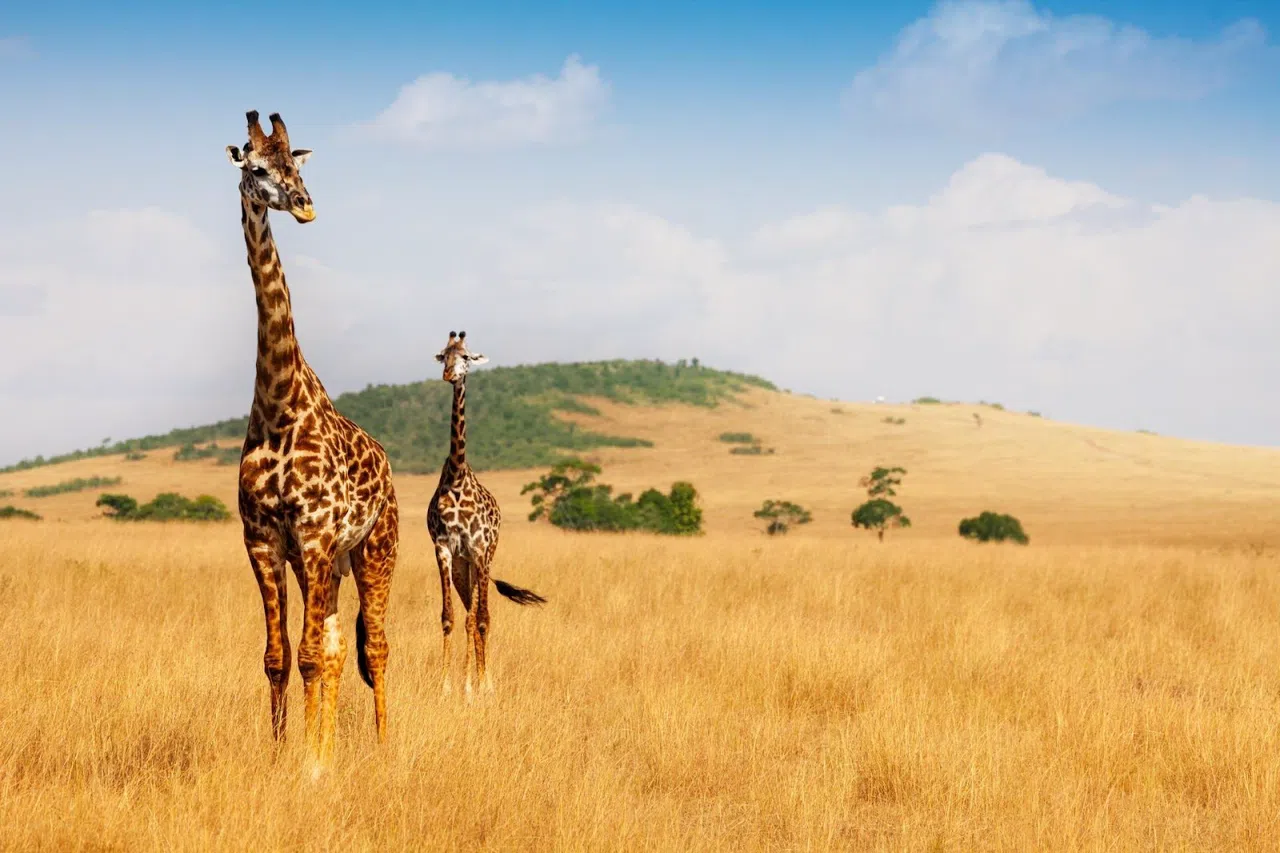
The tarmac out of Nairobi climbs through plantations for forty minutes, then the ground falls away at the Mai Mahiu escarpment and you are standing on a roadside kerb looking down at the floor of the Great Rift Valley. Five or six hours later the same vehicle is idling in long grass while a lioness decides whether to cross in front of the bumper. Three days is the shortest honest version of that journey, and a private Land Cruiser is what makes three days enough.
What three days actually buys you
The arithmetic is unforgiving and worth doing before you book anything. The reserve sits roughly 270 km from the city, and the last stretch is dirt, so the drive runs five to six hours each way in the dry and longer when it rains. That consumes most of day one and a solid half of day three. You are left with one afternoon drive, one full day and one dawn drive, about three and a half game-viewing sessions. That is enough to find the big cats if you are patient, but not enough to be casual about it.
A private vehicle protects those sessions. A Land Cruiser with a pop-top roof, one driver-guide and nobody else's itinerary in it means you roll out at 06:00 because you chose to, you sit on a leopard for forty minutes because you want to, and you skip the curio stop entirely. On a shared minibus, none of those three decisions belongs to you. Guided private versions of this itinerary run seven days a week and start from 3,360 USD per person, which looks steep until you price the parts separately: two nights full board, two or three days of gate fees per head, fuel, and a guide's time for 72 hours.
Self-driving is legal, and people do it. Every gate takes private vehicles without a booking. But the tracks are unsigned, April ruts will stop a soft-roader, and a driver-guide's radio network often decides whether you find a sighting or drive past it. If you do drive yourself, hire a guide at the gate.
The road out and the stops that earn their time
Great Rift Valley Viewpoint (Mai Mahiu escarpment, directly on the Mara road) arrives 1.5 to 2 hours out of the city and costs no detour. It is a widened shoulder, a line of curio stalls and a drop of several hundred metres. There are no toilets and no café, so treat it as a 10 to 15 minute photo-and-stretch stop. Sellers negotiate and nothing is fixed, so decide your number before you get out of the car.
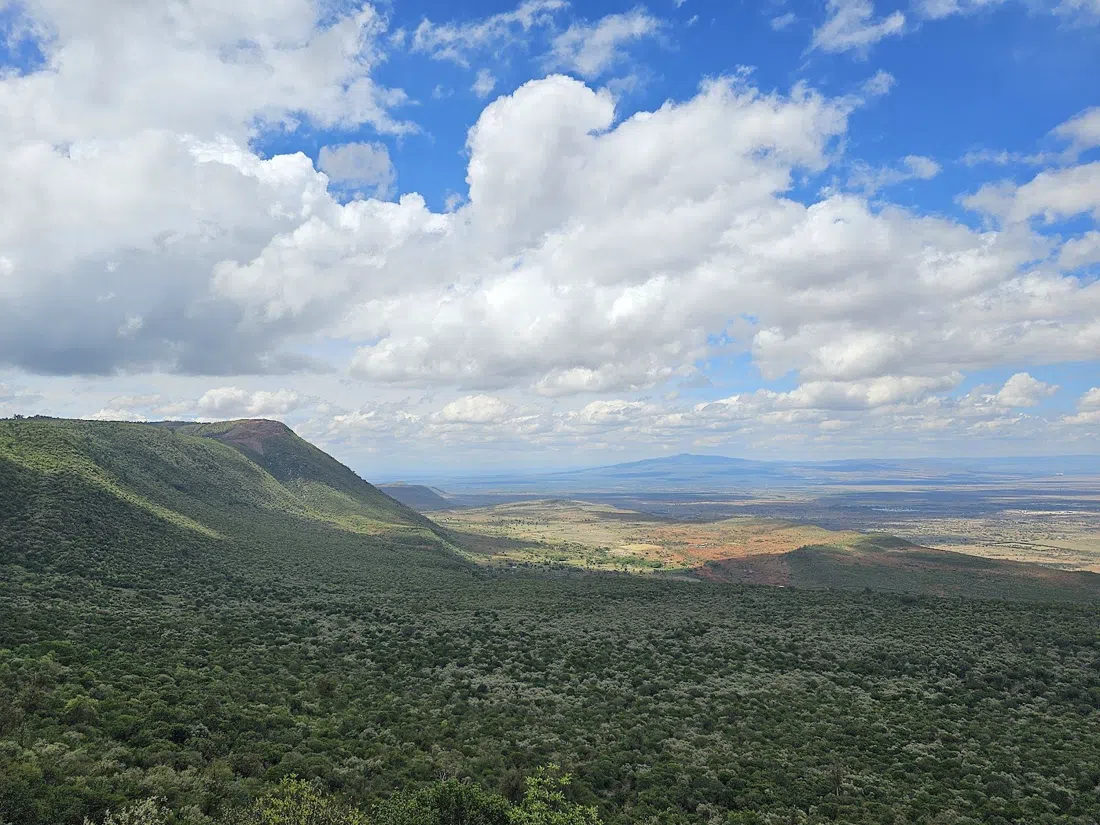
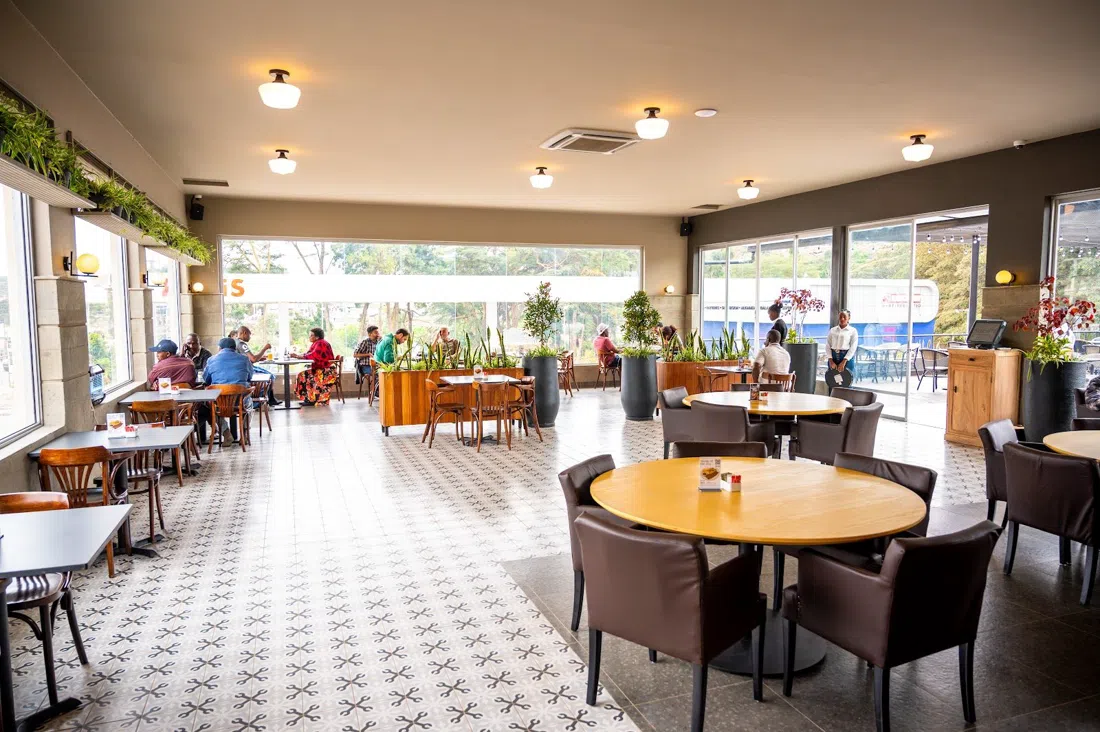
Save the real break for Narok, 141 km from the city and the last town that properly functions. Artcaffé Narok (inside the Rubis Mara Junction service station) is a sit-down café that absorbs a whole vehicle-load, open daily 07:00 to 23:00, with mains and coffee around KSh 800 to 1,800 a head. One forecourt gives you fuel, decent coffee, the cleanest tourist toilets on the route and a Quickmart next door for water. Budget twenty minutes, and expect nothing comparable afterwards.
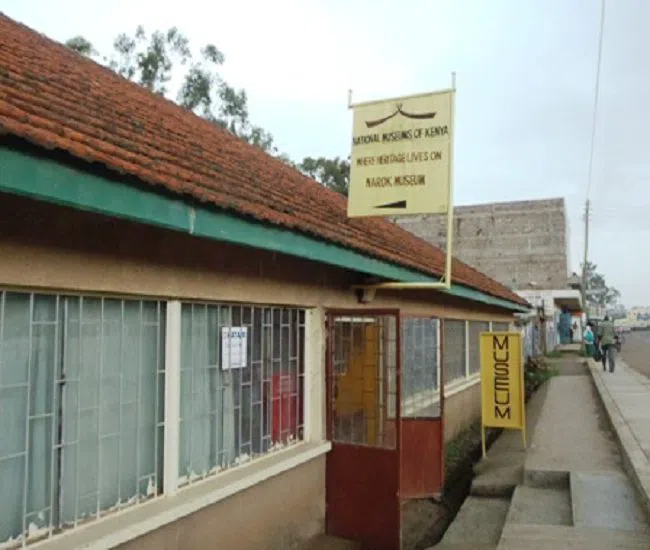
Thirty minutes more in the same town buys the context that stops the next three days reading as pure scenery. Narok Maa Museum (central Narok, a National Museums of Kenya site) covers the Maa-speaking cultures: Maasai, Samburu, Njemps and Ndorobo. It opens 08:30 to 17:30 every day of the year, public holidays included. Non-resident adults pay KSh 500, children under 16 KSh 250, East African residents KSh 400, and payment goes through the eCitizen portal only. Walk-ins are fine and so are groups.
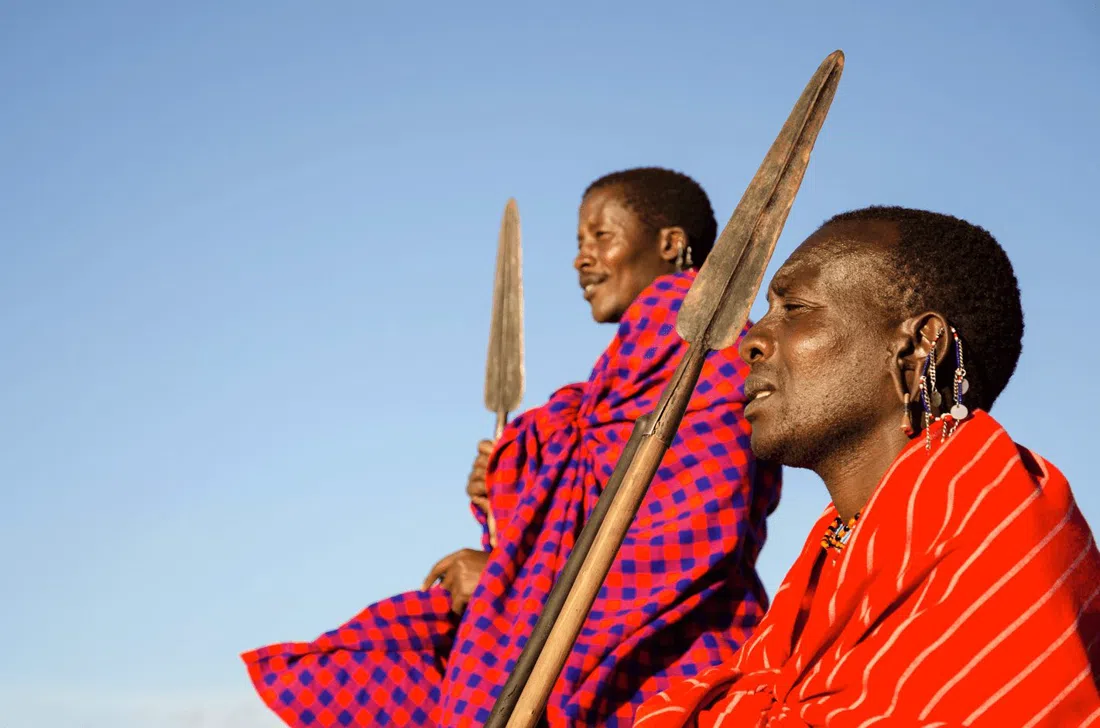
For something slower, Maji Moto Maasai Cultural Camp (roughly halfway between Narok and the reserve) is the version of a village visit that has not been arranged for a coach. Founded in the mid-2000s by community chief Salaton Ole Ntutu, it runs warrior training, the hot spring it is named for, a women's village and the Enkiteng Lepa school, with the money staying local. It takes day groups and overnight guests; pricing is entry-level community-camp rather than lodge, with no published rate card, so you enquire direct by phone or email. On a three-day run it works as a day-one stop on the way in. Staying over means giving up a game drive.
Clearing the gate without losing a morning
Every person pays per day at the barrier, and that fee is the biggest single line in the budget. Maasai Mara National Reserve (Narok County) charges non-resident adults 100 USD a day from January to June and 200 USD a day from July to December. Ages 9 to 17 pay 50 USD. Under-eights are free. The rate is identical whether you sleep inside the reserve or outside it. It is billed per 24 hours, so a three-day trip counts as two or three park days: in high season, 400 to 600 USD per adult in gate fees before a bed or a litre of fuel.
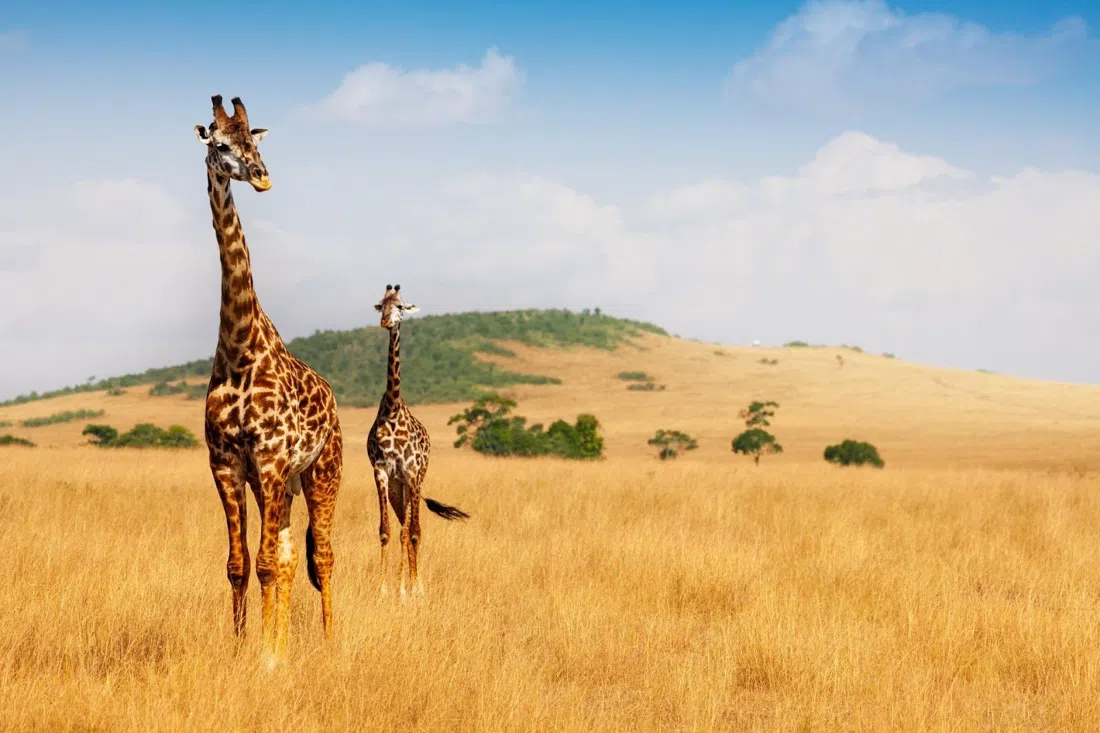
Sekenani Gate (eastern boundary, the main entrance) is where most vehicles clear, and it is the reliable time-waster. It opens at 06:00 with last entry at 17:30, one vehicle waits at the barrier while the driver-guide clears every passenger at the counter, and between July and October 15 to 20 vehicles can be stacked up. It is cashless: an eCitizen slip, Visa or Mastercard, or M-Pesa. Generate the payment slip about 48 hours ahead, because the mobile network at the gate is unreliable and finding that out while twelfth in line ruins a morning.
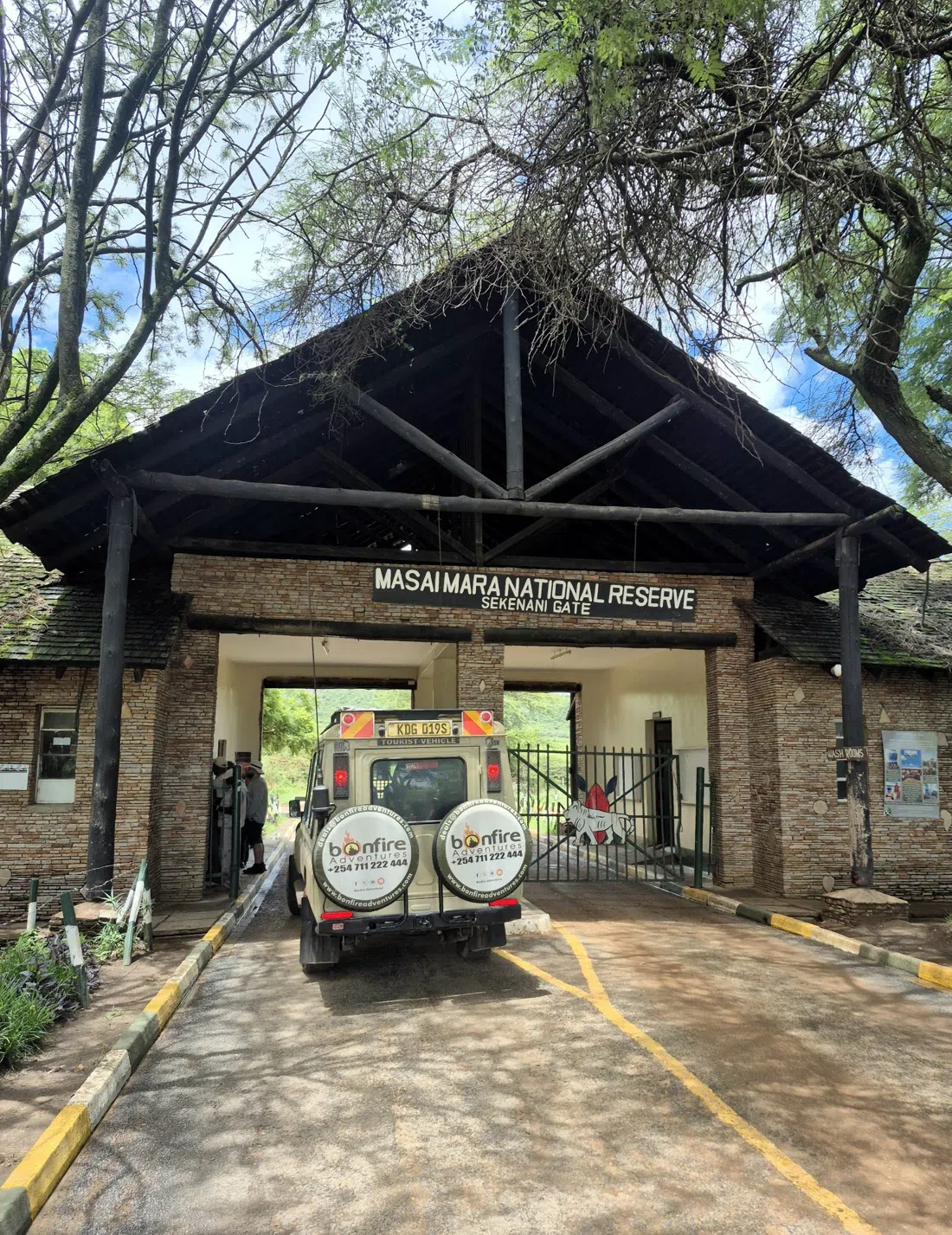
Talek Gate and Talek Town (Talek River, northeastern reserve) is the eastern alternative and the better approach if your camp sits along the river. Entry is the same 100 to 200 USD per non-resident adult per day. The town is where guides eat and restock, and the KCB ATM beside the gate is the last reliable cash point inside the ecosystem. The river-front camps here have hippo pools within earshot after dark.
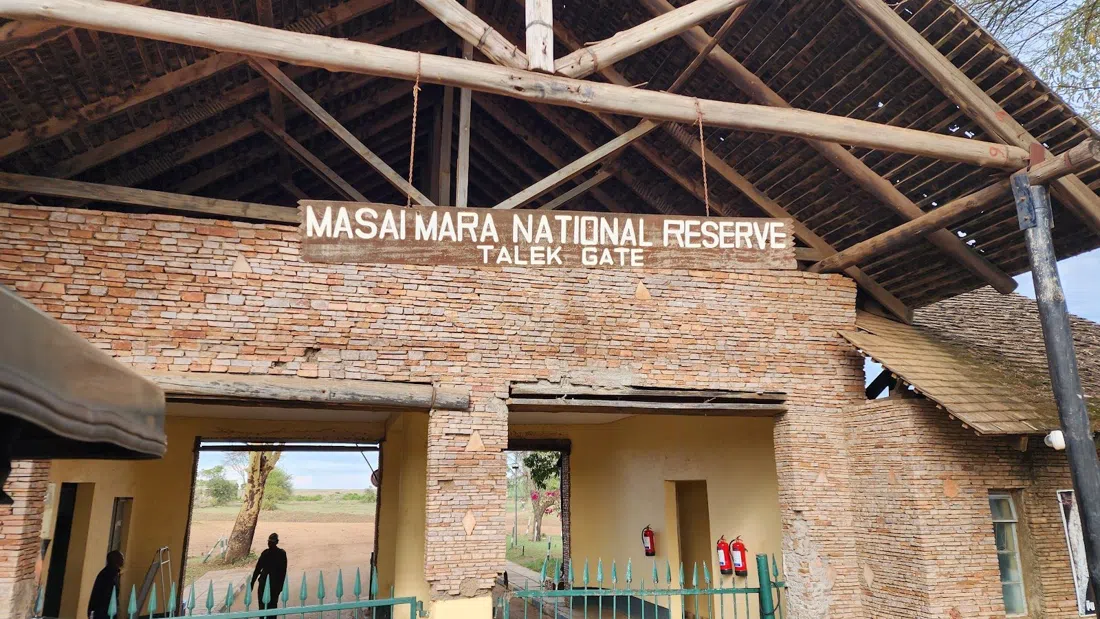
The reserve and the third of it that behaves itself
The reserve is unfenced, enormous, and in the eastern sectors in peak season genuinely busy. One lion on a kill can pull a scrum of thirty vehicles, and in the county-run sectors nobody polices it.
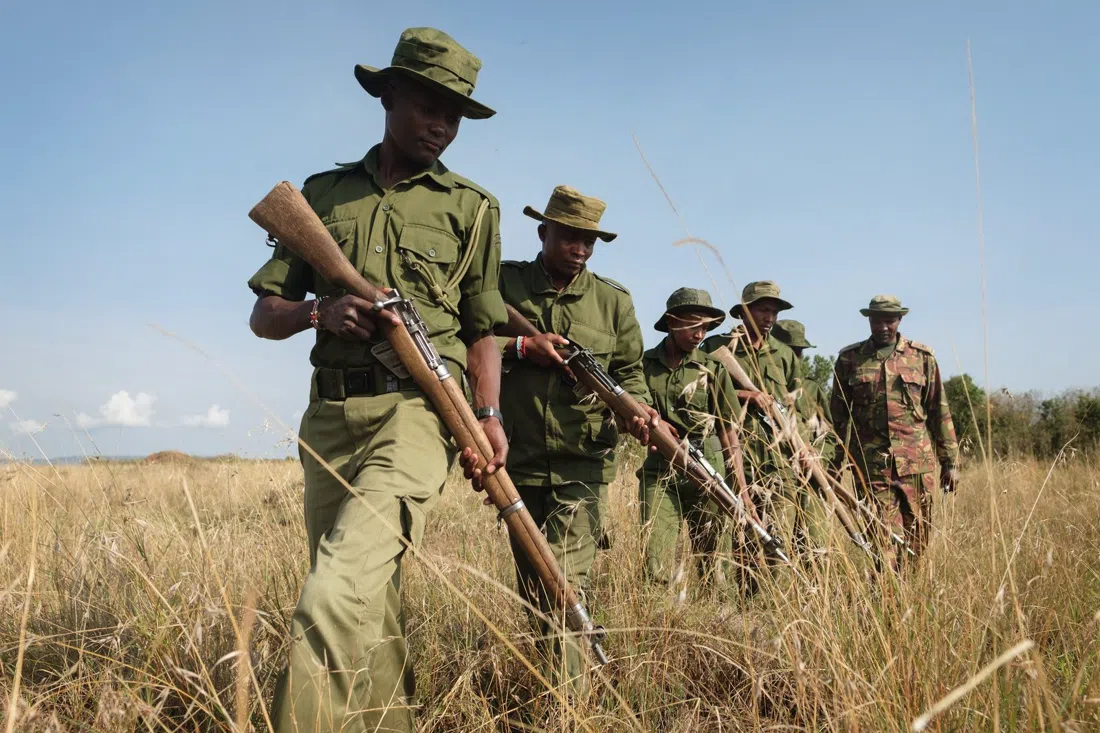
Mara Triangle (the western third, entered at Oloololo Gate, Purungat Bridge Gate or Serena Airstrip) is run by the non-profit Mara Conservancy rather than the county, and the difference shows inside an hour. Once more than five vehicles are waiting on an animal, viewing time is capped at ten minutes. Vehicles must hold 100 m back while queuing. Roving cheetah vehicles police guide behaviour rather than recommend it. Per-day rates match the rest of the reserve, 100 USD January to June and 200 USD July to December for non-resident adults, and it is cashless: Visa, Mastercard or M-Pesa, with no cash taken at all. If a crowded cat sighting would spoil the trip for you, spend your full day here.
Mara River and Purungat Bridge (Triangle side, free with reserve entry) is why the migration is famous and also a year-round draw regardless of where the herds are. Hippo and crocodile are resident. The eastern crossing-watch points get packed; the bridge gives a different angle on the same water with far fewer vehicles around you.
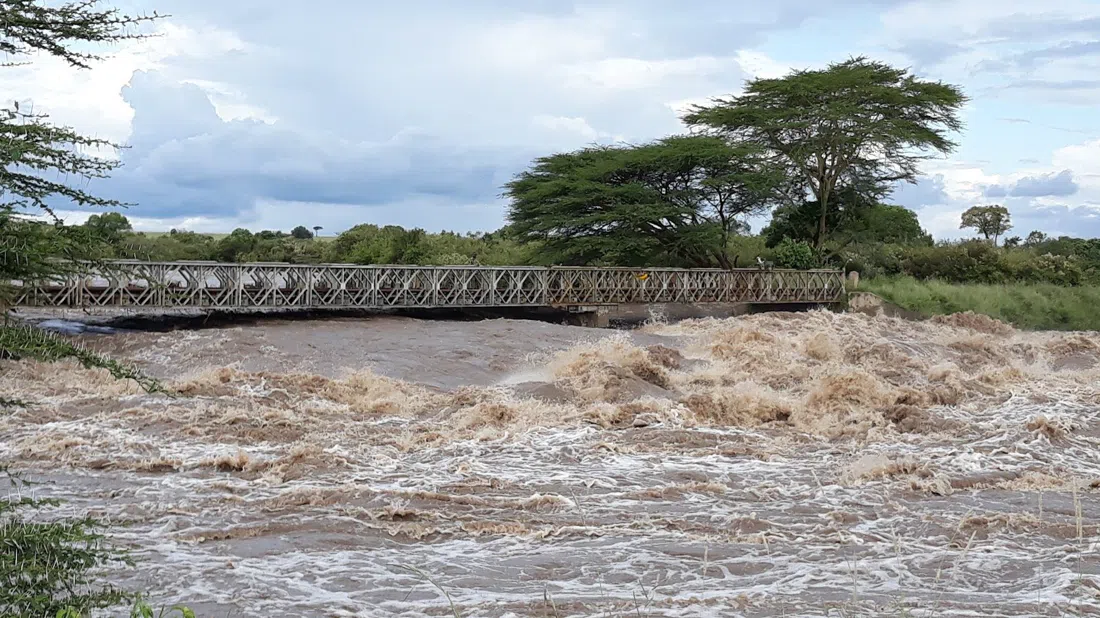
Lookout Hill (south-central reserve) makes the scale of the place legible in about five minutes. There is nothing arranged about it, you drive up and park, and it sits near the first crossing points the herds use coming north. Camps and lodges set up private sundowners here for groups, which is an extra arranged through the property. Go in the last hour before the 18:00 curfew, for the light.
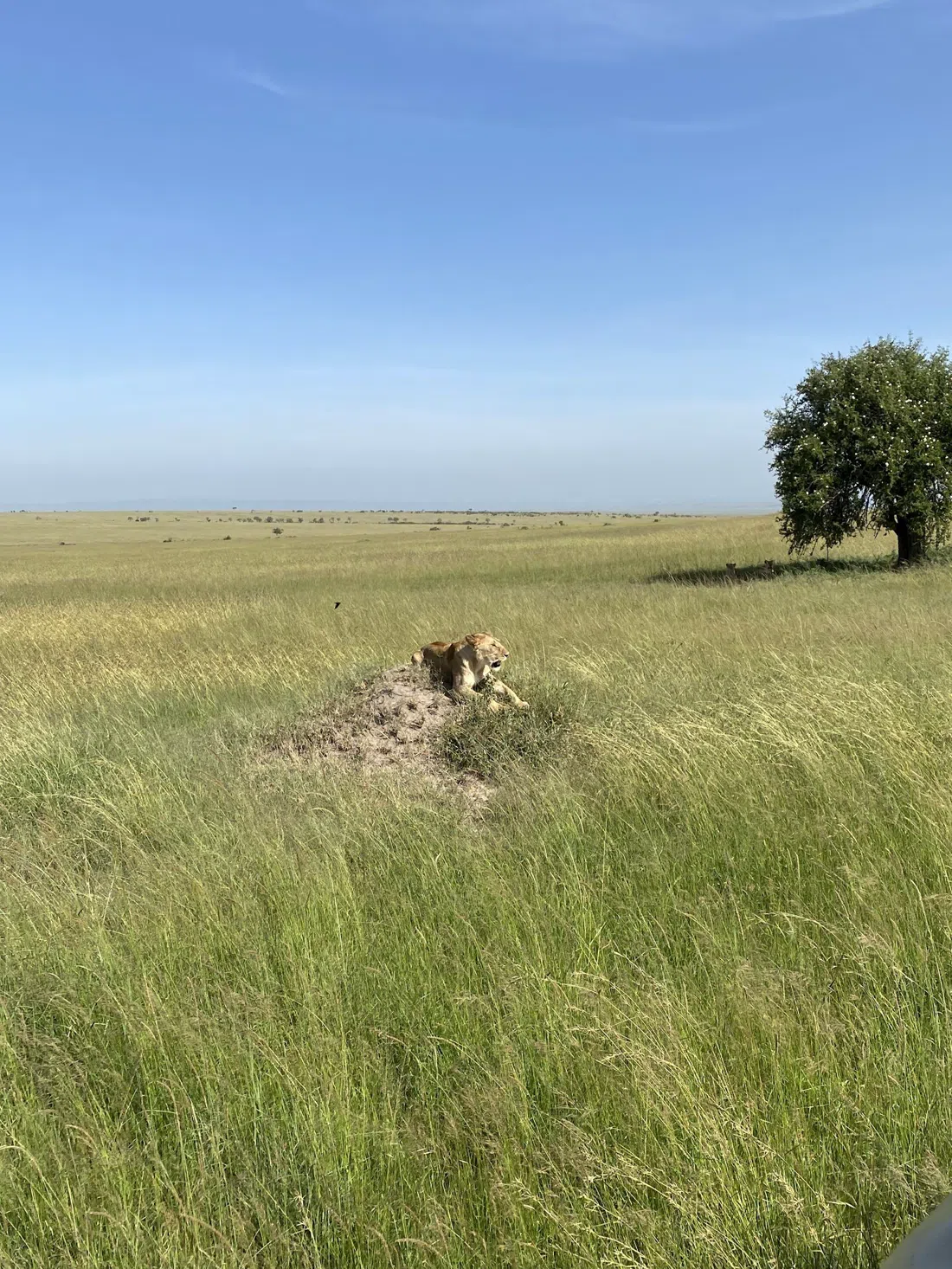
Two nights, three price bands
Mara Serena Safari Lodge (inside the Mara Triangle) is the only lodge actually in the Triangle, and that is its entire argument: you are through the gate and on game before the day-visitor convoys arrive. Seventy-four rooms including one suite, a fenced perimeter and a central pool mean it handles families and larger groups without strain, at roughly 300 to 450 USD per person per night full board. Breakfast beside the hippo pool on the river bank after an 06:30 drive is the thing people remember about it.
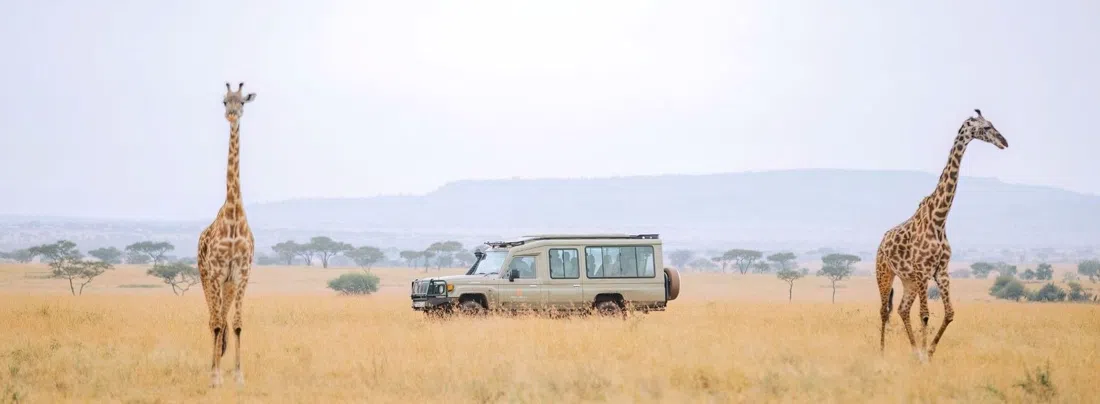
Muthu Mara River Lodge (Lemek Conservancy, five minutes from Mara North airstrip) opened on 14 January 2026 with 81 rooms (60 garden view, 18 river view, three family suites) and is built for groups rather than honeymoons. Roughly 200 to 350 USD per person per night full board puts it a band below Serena, and it has Starlink, which out here is unusual. It is also where MGM Muthu now directs guests while its sister lodge is closed for renovation, so plan on lively rather than secluded.
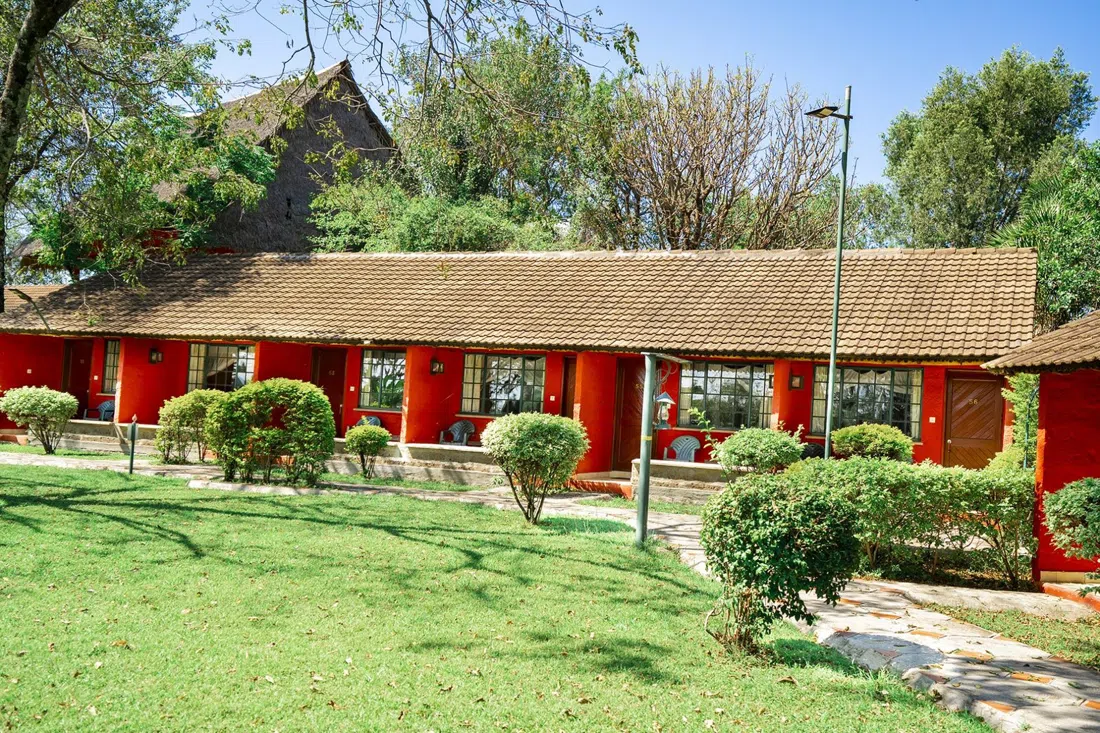
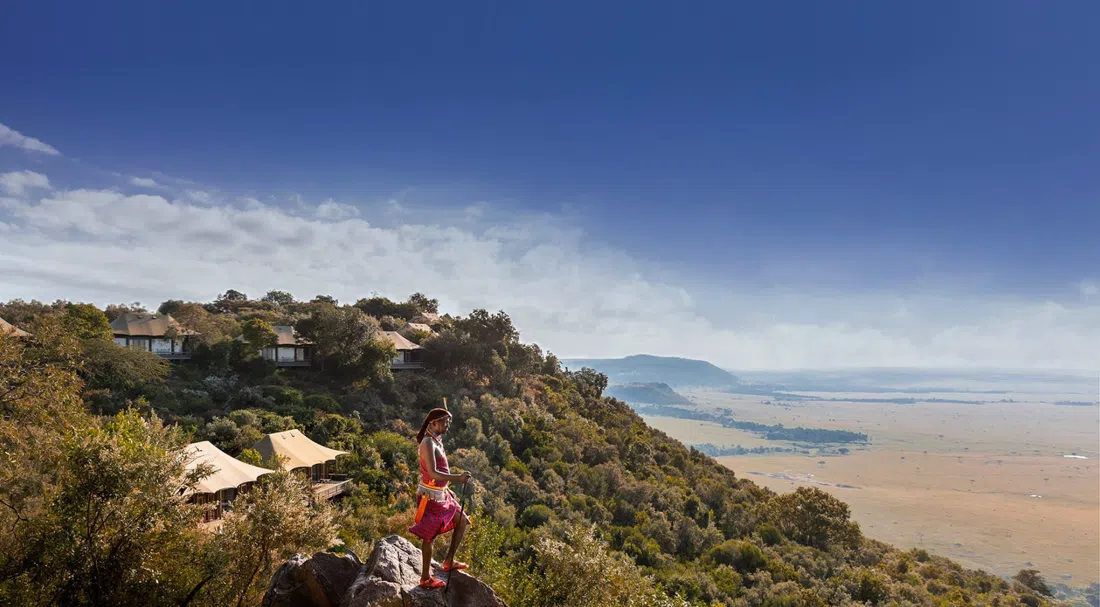
Angama Mara (on the Oloololo escarpment ridge) is the other bookend: 1,850 USD per person per night in standard season, 2,750 USD at peak in July to September and over Christmas, with Triangle park fees on top. Private game vehicles cost extra, and the sister Angama Safari Camp takes a whole family or friend group exclusively. Access is guests only. It is worth knowing about even if you never book it, because the ridge it sits on is the escarpment you drive beneath all day: the one used for the filming of Out of Africa, where the lodge still lays a private picnic.
The balloon and the quieter ground next door
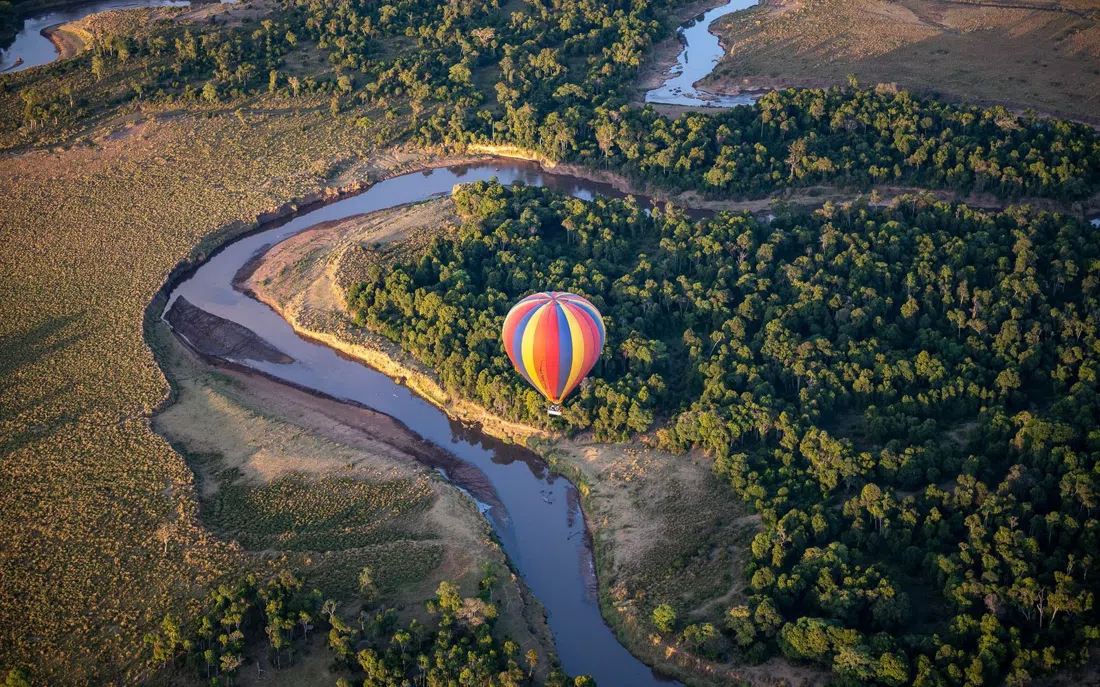
Governors' Balloon Safaris (pickups by arrangement from camps and lodges across the reserve) has been flying here since 1978 and is the add-on most people say justified itself. Baskets are shared and carry a group, so it is not a private hour, but you do not need to be a Governors' guest to fly. Roughly 390 to 500 USD per person covers transfers, about an hour aloft, a sparkling-wine bush breakfast on the ground and a game drive back. Children must be 8 or over and taller than 1.2 m. It departs soon after dawn and it is weather-dependent, so put it on day two, which leaves day three to re-fly a scrubbed flight.
Mara Naboisho Conservancy (immediately northeast of the reserve) is the straight answer to how you escape the crowds. Walking safaris, night drives and off-road approaches are all permitted here and all banned inside the national reserve, and rangers enforce the vehicle caps rather than suggest them. The trade is access: no self-drive, no day visitors, and you must be a guest of a partner camp, driven by a conservancy-registered guide. The conservancy fee runs about 100 to 120 USD per person per night for non-residents and is normally folded into the camp's all-inclusive rate. On a 72-hour trip you can do the reserve properly or Naboisho properly, but not both.
What the rules allow and what they do not
Inside the national reserve there is no off-road driving, no night driving, and no getting out of the vehicle except at designated spots. Gates run 06:00 to 18:00 with last entry at 17:30. A private vehicle buys you control of your hours, not an exemption from any of that. In the Triangle, add the ten-minute cap and the 100 m queue rule, both of which are actively enforced. The conservancies invert the whole arrangement, which is why guides who care about photography steer you there.
Is it worth it
Yes, with eyes open. Three days means ten to twelve hours of road for roughly three and a half drives, and if you want unhurried days you want four nights, not two. But the format works because of what the private vehicle removes: no convoy departure time, no shared schedule, no negotiating a sighting with five strangers. Across the bookable tours attached to this page there are 235 traveller reviews, and the top one is rated 5.0 out of 5 from those 235. That is a modest sample but a consistent one, and it matches what the format delivers when the Land Cruiser is yours alone.
It suits couples who want to set their own hours, photographers who need to sit still for an hour, families with children over 8 (the balloon age floor, and under-eights enter the reserve free) and small friend groups splitting one vehicle, which is where the per-person maths improves sharply. It suits less well anyone with a bad back, anyone who wants solitude in the eastern reserve in August, and anyone who would rather have one long unhurried stay than a tight loop.
Best time to go
January to June halves the gate fee to 100 USD per non-resident adult per day, and that is the single largest saving available on this trip. The grass is green, the light is better, and there are far fewer vehicles. The cost is rain: afternoon storms in the green months and the long rains around March to May, when 4x4 is strongly advised rather than optional and some tracks become a genuine problem.
July to December doubles the fee to 200 USD a day and brings the river crossings, which is why Sekenani stacks up with 15 to 20 vehicles in the July to October window and why the escarpment lodges charge peak from July to September. If the migration is the point, pay it. If it is not, the dry weeks of January and February give you clear tracks at the lower rate.
Within the day, the only hours that matter are 06:00 to 09:00 and 16:00 to 18:00. Midday is for driving back to the lodge, eating, and sleeping off the dawn start. Build the balloon into day two and treat any weather call as expected rather than unlucky.
The half-day at either end
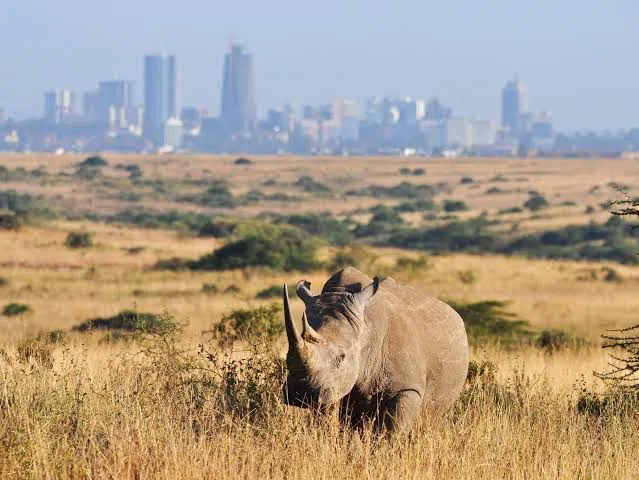
Nairobi National Park (Langata, on the city's southern edge) is the sensible use of the half-day before or after a Mara run, since the Mara legs start at dawn and finish late. Rhino, lion and buffalo against a skyline, open 06:00 to 18:00 with last entry at 17:15. Non-resident adults pay 80 USD per 24 hours, children and students 40 USD, plus about KSh 600 for a vehicle under six seats, eCitizen only with no cash at the gate. Pre-paying also means no ticket queue. The Sheldrick Wildlife Trust orphan-elephant nursery sits inside the park with its own advance-booked visiting hour, 11:00 to 12:00 daily, which slots neatly after a dawn circuit.
Because the Mara departure is a 06:00 affair, sleep somewhere that lets you leave without a cross-city crawl. Compare rates and locations on Nairobi hotel search. If you have a spare evening at either end, the Nairobi guide covers what to do with it.
Practical notes
The drive is roughly 270 km each way, five to six hours in the dry and more in the wet, with the last stretch unsealed. Fuel at the Mara Junction forecourt in Narok on the way out and again on the way back; nothing better exists inside the ecosystem. Airstrip transfers are the alternative, but you then lose the escarpment, the museum and the whole road.
Gates are cashless across the board: eCitizen slip, Visa, Mastercard or M-Pesa. The Triangle takes no cash at all. Generate your eCitizen slips about 48 hours ahead for both the reserve and the city park. The KCB ATM at Talek Gate is the last reliable cash point once you are in, and you want small notes for curio sellers and guide tips.
On timing, leave the city by 06:30 to be at the gate before the afternoon queue. Last entry is 17:30 and the 18:00 curfew is real. Keep day three's dawn drive short and firm, because the road home is longer than it feels.
Per adult for two nights: gate fees 200 to 400 USD depending on month and park days, bed and board 400 to 900 USD across two nights at the Serena or Muthu bands, balloon 390 to 500 USD if you fly, road stops under KSh 3,000, museum KSh 500. The fully private guided run comes in above the sum of those parts and buys you the vehicle, the guide and the 72 hours of not sharing either.